
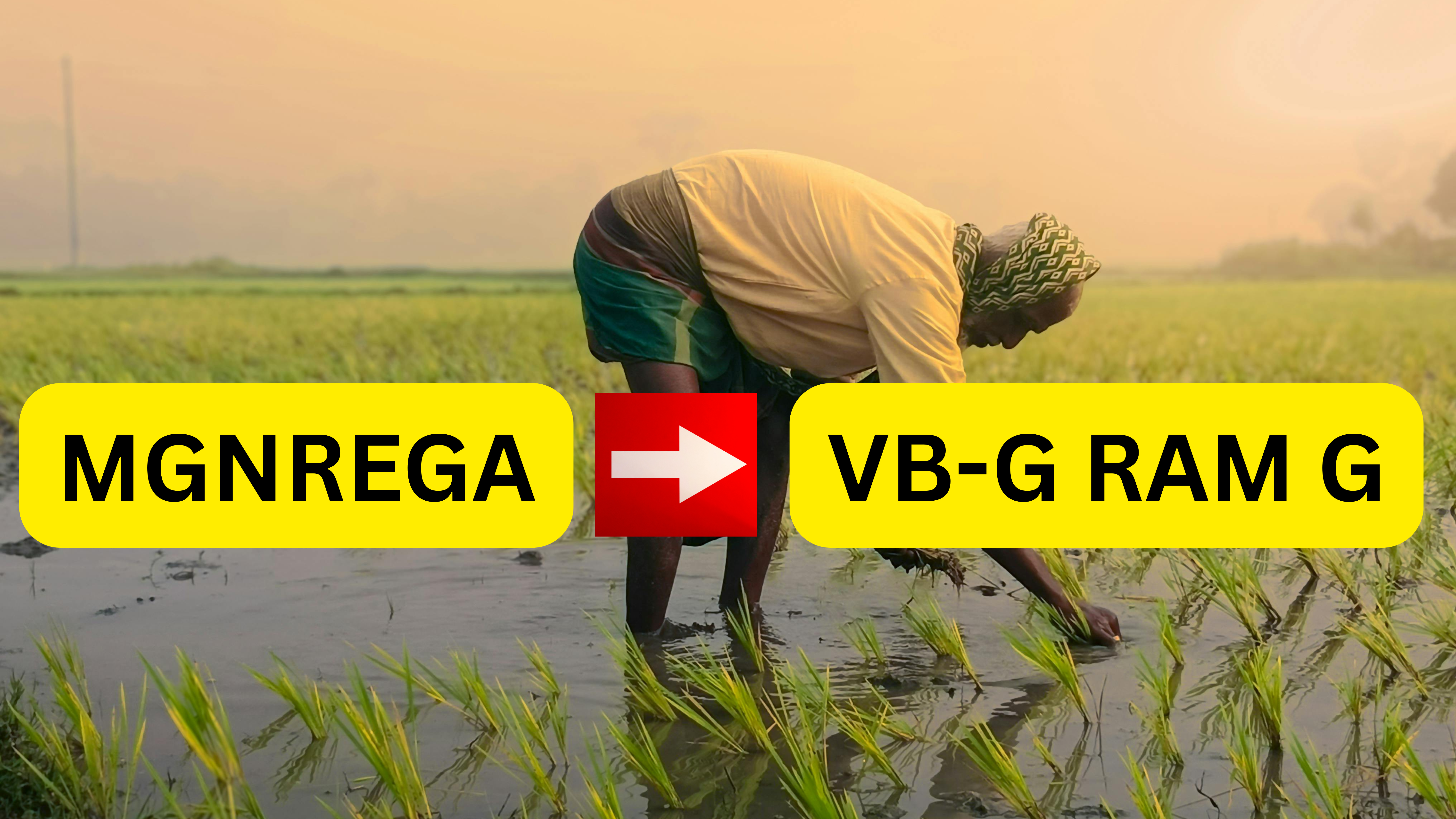
In the recently concluded session of Parliament, amidst blaring opposition, Speaker Om Birla passed the Viksit Bharath – Guarantee for Rozgar and Ajeevika Mission (VB – G RAM G). Proposed as a replacement for the epochal MGNREGA, this new bill restructures and decimates work security and employment guarantee in the country.
Much like the previous bills proposed by the ruling party, this one, too, looks beneficial on paper. It increases guaranteed wage employment from 100 days to 125 days and includes a 60-day pause during peak sowing and harvesting season in order not to clash with the demand for agricultural labour. And these are the aspects of the Bill repeatedly highlighted by mainstream media. But as with previous bills, this one, too, looks good only on paper. Among its four main areas of focus, two of them are road and rail construction and port construction, once again highlighting the BJP’s focus on needless, exploitative and corrupt infrastructure expansion under the garb of development.
Labour rights activists, policy experts and workers’ groups strongly condemn the Bill. One of their main points of contention is the fact that VB-G RAM G is not a centrally funded scheme, unlike MGNREGA. In a statement released by NREGA Sangharsh Morcha, signatories say, “Previously contributing only 25% of material costs, states now face burdens of 40% to 100% of total costs, ensuring poorer states will curb project approvals, directly stifling work.” This Bill is coming at a time when India’s unemployment is at the highest it has been in decades, coupled with the NDA Government’s past tactics of using the GST Act (among others) to cripple states’ agility on fiscal prudence, makes it nearly impossible for workers to put their trust in this Bill.
Over the years, the Central Government has committedly worked to weaken MGNREGA, despite it being the only solace for a large number of rural households, whose incomes have been dropping drastically. Referring to the pause period and the troubled fund allocation by the Central Government, the statement says “This structural sabotage is compounded by discretionary ‘switch-off’ powers, which allow the scheme to be suspended arbitrarily and render the guarantee meaningless. The unexplained defunding of West Bengal in the last three years exemplifies this political misuse. The new framework institutionalises this risk, imposing unfunded mandates on states without consultation.” This Bill takes away citizens’ rights to demand jobs and leaves them at the benevolence of the state.
Since the Bill was passed, its opponents have only been growing and getting louder. Opposition members stormed out of the Parliament after their voices were snubbed. They staged an overnight protest in front of the parliament, where they tore copies of the new Bill. This chaos stands in sharp contrast to the pin drop silence in the Parliament 20 years ago, when the Speaker asked if anyone in the house opposed MGNREGA. This move by the BJP, preceded by its ‘reforms’ to the labour codes, makes the ruling party’s anti-worker philosophy hauntingly clear.
