
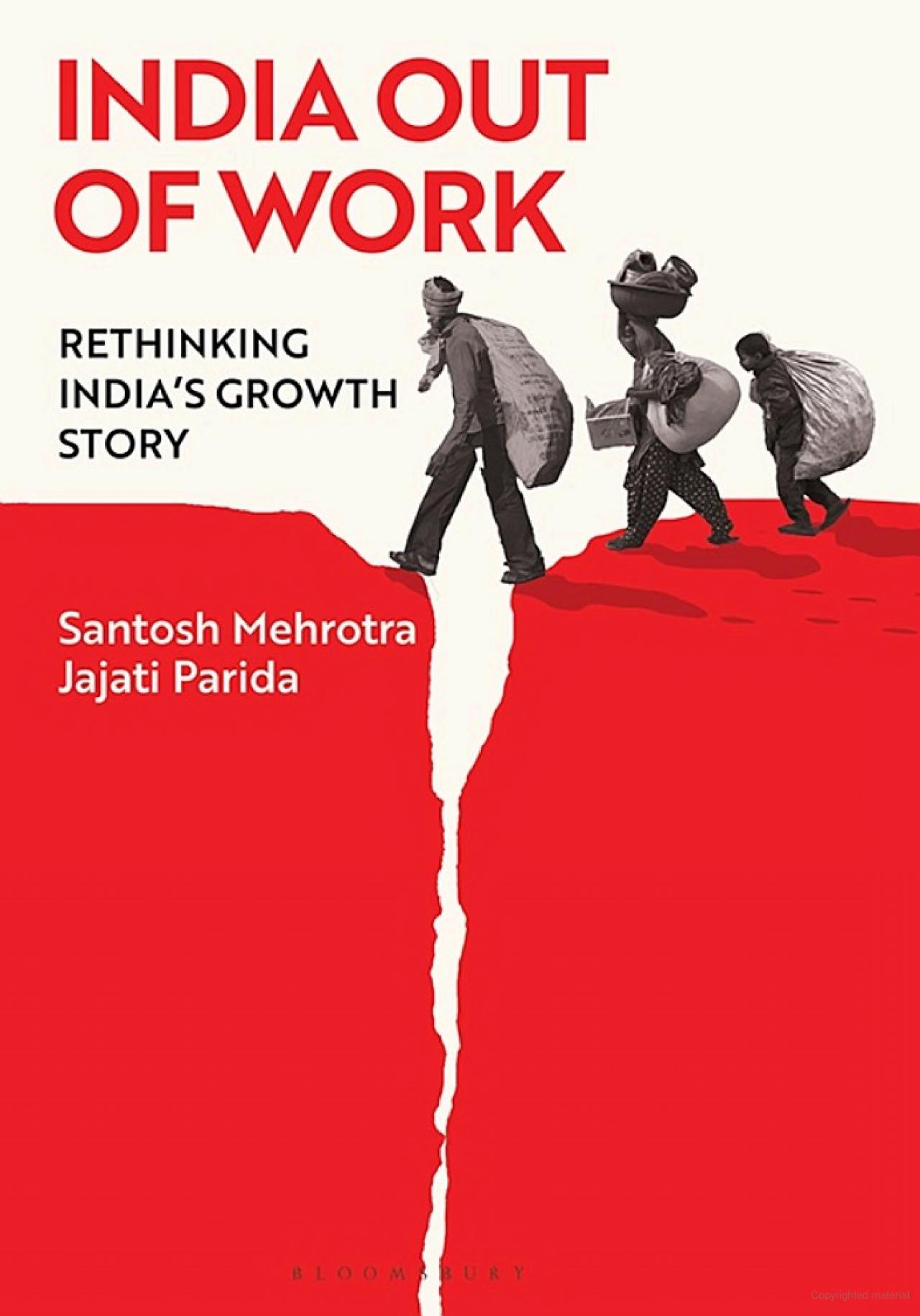
An excerpt from ‘India Out of Work: Rethinking India’s Growth Story’
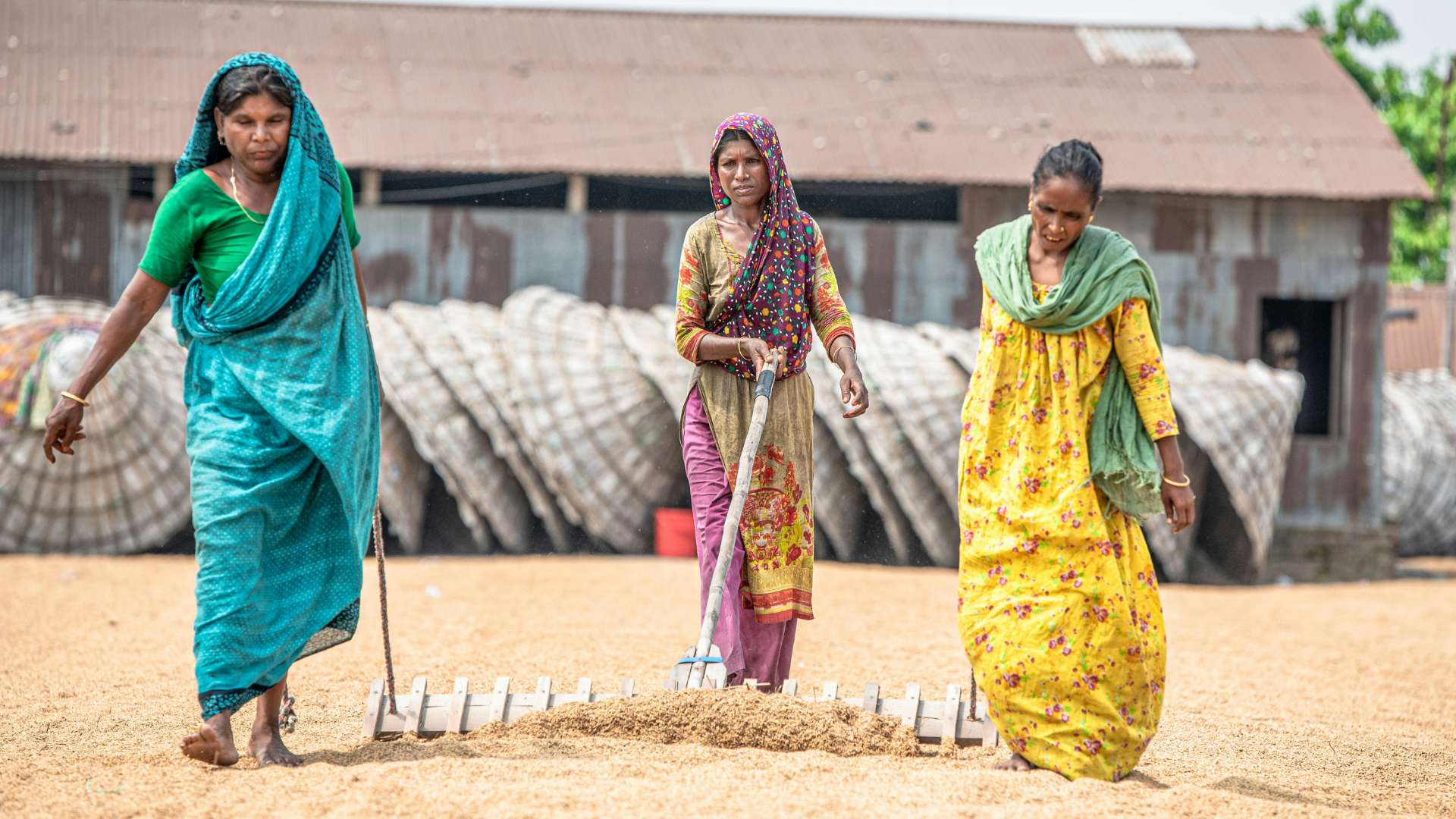 India Out of Work explores the growing crisis in India’s labour market. Over the past few years, non-farm jobs, which are crucial for diversifying the economy and providing stability, are not growing as they should. The formal job sector, which offers security, benefits and fair wages, is also stagnant. This lack of job creation is pushing more people into unpaid or informal work (the latter constitutes just over 90 per cent of the workforce) where they struggle to make ends meet.
At the same time, unemployment among educated youth has been on the rise, mainly in the last decade (not before that). Despite qualifications and skills, many young people cannot find jobs that match their training or aspirations. This leads to frustration and despair and, in cases of desperation, suicides among the young as they see their dreams slipping away. National Crime Records Bureau data analysed by the India Mental Health Observatory (2021 and 2022) notes that the highest share, by age group, of suicides was of 18-year-olds to 35-year-olds (34 per cent) and of 35-year-olds to 45-year-olds (32 per cent). The reported suicides by profession were 15,783 suicides for unemployed people. The highest number was for daily wage earners (45,194), followed by self-employed people (19,484), professionals (16,364) and students (13,044), though housewives were a significant number (25,301), suggesting clearly that the reasons are likely to be complex.
Be that as it may, when the unemployed cannot find jobs, many stop looking for work entirely, a phenomenon economists call ‘discouraged worker’. Such young people could contribute to the economy yet choose to opt out, believing that there are no opportunities for them. This is tragic as India’s labour force participation rate (LFPR), or share of the working-age population looking for work, is well below the global average.
Worsening this looming crisis is the increasing number of young people (15-year-olds to 29-year-olds) who are categorized as NEET—not in education, employment or training. This group represents lost potential as it is not gaining the skills or experience needed to participate in the economy. The rise of NEETs is a sign of deeper systemic problems, where the education system, job market and economic structures are failing to support young people’s transition into productive employment, thus creating present and future fertile ground for inevitable social conflict. The number of NEETs crossed 100 million in 2020 (from around 50 million in 2012) and has remained above that number since.
Current Challenges
 In 2025, India is barely 15 years from the end of what could have already been a transformative demographic dividend (DD)—by 2040, as we discuss in the next chapter. At the current juncture, as its working-age population outnumbers the dependents, the DD still presents an unprecedented opportunity for economic growth and prosperity. However, the country is grappling with an employment crisis that undermines this potential. Instead of capitalizing on its demographic advantage, India has been experiencing a reversal of its structural transformation.
This development needs to be understood in the historical context of the demographic change occurring gradually in India since 1950. India was the second most populous country in the world (China being the first), 350 versus 550 million (according to the 1951 Census). That is, India was a good 200 million short of the world’s most populous country. However, that situation has transformed in the last 75-odd years, with India having become the world’s most populous. Population size matters, since these large populations, if they see rising labour productivity, can also become very large economies with the capacity to influence the world’s GDP growth rate. In Purchasing Power Parity terms, China is the world’s largest economy since 2013 (followed by the USA, though at market exchange rates, the situation is the opposite), while India is the third largest economy since 2007.
However, the well-being of large country populations depends on how productive their labour is, which itself is a function of their education level and their health status. So it is not surprising that China’s investments in its population’s health and educational levels, especially in the first three decades of its existence as a modern nation after the revolution of 1949, paid off rich dividends. The levels of education and health of its population when their economic reforms began in 1979 were far superior to those of India. India’s failure to invest in the education (as also the nutrition and health status) of its population until the 1990s led to a population growth rate far higher than China’s. Hence it has exceeded China in total population. Yet the quality of its human capital is greatly inferior (as we discuss at length later in the book).
The implication for the overall size of its population is as follows for the present and future human development of India. China started in 1950 with a population density of 56.7 persons per sq km (rank 17 as per density in Asia), while India began with 116.9 per sq km (rank 11). That situation had transformed by 2023 to 483 per sq km in India (rank 9 in Asia) as against 148 in China (rank 21 in Asia). All South Asian countries have densities far higher than any of the other developing East Asian economies for the same reason as India, that is, the neglect of health and education and, hence, higher total fertility rates (TFRs).
To the credit of China and India, unlike much of Sub-Saharan Africa (SSA), both these large Asian countries have reduced their fertility rates to 2.0 in India (2021) and 1.0 in China (2023). So while China’s total population has already begun to shrink, its DD was over by 2012–2015. India’s population will grow from its current level of 1.42 billion (2024) to 1.65 billion in 2062 before beginning to shrink. Rising population density in India’s cities has already made them quite unliveable as both congestion on the land and air pollution grows. Unless further urbanization and industry and jobs shift away to smaller towns and cities that are also growing, the quality of life could further deteriorate, rather than improve.
We keep coming back to the India versus China/East Asia comparisons throughout this book. Here, we note that while generally East Asia’s population peaked at a density well below 150 per sq km (including China’s), India’s density is over three times as high. Worse still, there are states like Bihar and West Bengal with a density that is about three times the Indian average, while Uttar Pradesh (UP) is at least twice the average.
When we combine this phenomenon with the poor quality of human development, the human capital level becomes a severe constraint upon growth—and the large mass of poor people with low human capital are a severe constraint on the quality of jobs they are capable of commanding, outside of agriculture, and contribute to an already entrenched informality.
During the Covid-19 pandemic and thereafter, workers who had earlier left agriculture for better earnings in the first half of the noughties shifted back to agriculture instead of moving to more productive or formal jobs in non-farm activities. In other words, India has seen a reversal of structural change that normally characterizes the economic development of countries. Worse, millions (women in particular) were forced into unpaid family labour (UFL) due to distressed family conditions and lack of better employment opportunities in the non-farm sectors. This reversal indicates human distress even as the economy grows.
The agricultural sector, traditionally seen as the last resort for employment in rural areas, witnessed a resurgence. Unbelievably, about 80 million people rejoined this sector (including women in rural areas who had exited from agriculture after 2004, as PLFS quarterly survey suggests) between mid-2020 and mid-2024, and this increase continued until 2025 not because of farm growth and modernization but due to the stagnation in both industry and services. Never in India’s history, or perhaps even the development history of any country, had a reverse migration on such a scale in so little time ever happened. This trend signifies a deeper malaise. Industry/services failed to absorb the burgeoning young and educated workforce. Although the low-skilled construction sector absorbed a few, the expected engines of job creation, the manufacturing and the service sectors, have not expanded at the necessary pace. Manufacturing employment actually contracted for 5 years starting from 2016, again probably for the first time in India post-Independence, which leaves millions without adequate employment prospects.
Hence India’s first set of challenges includes the creation of adequate (formal) non-farm sector jobs to accommodate both the ‘new entrants’ and those who are supposed to leave agriculture. This is necessary to sustain India’s economic growth over 9 per cent for the next decade (2025–2035) and 8 per cent per annum thereafter, both of which are necessary to generate the jobs needed.
(Santosh Mehrotra is a professor of economics at the Centre for Labour, Jawaharlal Nehru University. Jajati Keshari Parida is professor of economics, University of Hyderabad. Excerpt reproduced with permission from ‘India Out of Work: Rethinking India’s Growth Story’, by Santosh Mehrotra and Jajati Parida. The book can be ordered at Bloomsbury)
