
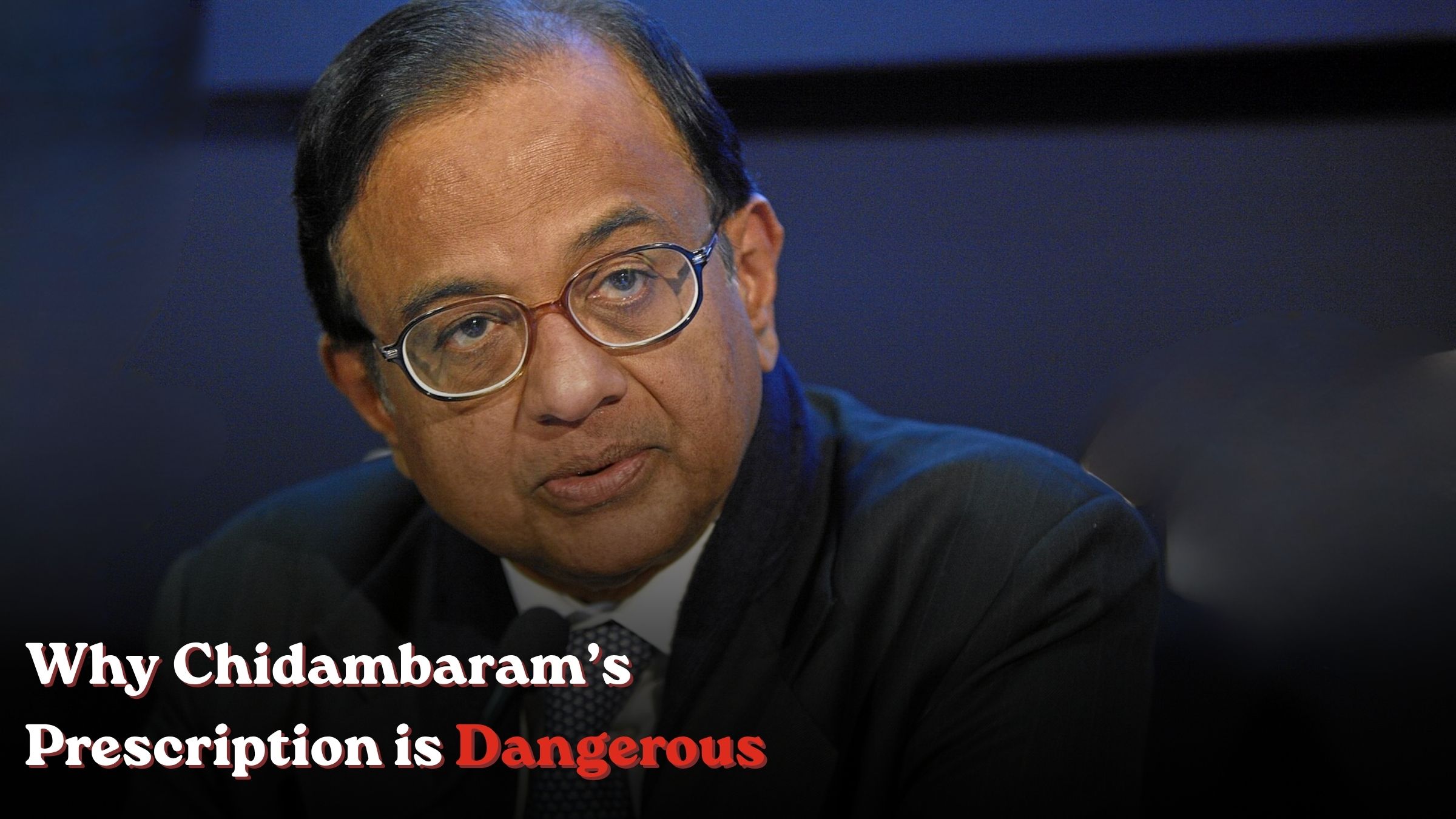
An Interview of former minister P Chidambaram in yesterday’s (Aug 27) Business Standard tells us what has been wrong about policymaking in this country and flawed policymaking is not an innovation of Modi government.
In the interview, reflecting on the economic liberalization 35 years back, he says how trade reforms were brought in then. He was the minister of state for commerce with independent charge in P.V. Narasimha Rao government.
He narrates that the then finance minister Manmohan Singh wanted Chidambaram to withdraw the cash compensatory support for exports. More than the consequences (or the absence of it), what worried Chidambaram was “no Commerce Minister can start his tenure by withdrawing the only support offered to exporters. They will say I am anti-exporter. So I can’t do that.”
Hence he, along with Montek Singh Ahluwalia, then Commerce Secretary, suggested to the Prime Minister that a “package” should be made to withdraw the cash compensatory support to exports. The Prime Minister agreed.
He goes on to say, “So Montek Singh and I drafted the package, one element of which was withdrawing the cash compensatory support. Among others were the dual exchange rate and the EXIM scrips (a government document issued to exporters).
We put together a package and then we took it to the Finance Minister. Singh read through the package and accepted it. We went back to the PM, who came to the drawing room. He had just had a shower and was wearing a lungi and a vest. He asked if I had signed it, to which I said, “Yes.” He looked at Singh and asked, “Have you signed?” He said, “Yes.” He then took the file and signed it.
That’s how the trade reforms were done.”
What is more startling is his prescription on how policies should be made. He goes on to say, “There was no bulky file, no notes, no under-secretary or deputy secretary. The three principals decided on a policy, and that is how the trade policy was made, and that is how policy should be made. All the advisors and IAS officers should give inputs to the principals to decide the policy. The policy must be decided and sent down. It can’t involve writing innumerable notes. That’s where policy fumbles and is derailed” (emphasis added).
While this underscores what many economists were saying that the 1991 reforms were done hastily and without proper consultation, this also tells us that bypassing democratic processes of policymaking started much before Modi government mastered that art.
By advising that “that is how policy should be made” what he is advocating for is bypassing consultations with affected citizens and stakeholders, industry and civil society, independent experts, state governments and even parliament while drafting policies. In other words, without even a trace of transparency and with full confidence that they will never be held accountable.
He recommends concentration of policymaking power in a very small group and a heavy top-down approach. He relegates citizens to merely voters (even that is being snatched away now!) and not participants in democratic decision-making. He wants to avoid a scrutiny of what was proposed, what evidence was considered, who advised what, what alternatives existed, and why the final decision was taken.
Chidambaram is not alone in thinking so. The then NITI Aayog CEO Amitabh Kant echoed the same when he said that tough reforms are difficult as India has too much of democracy.
While tracing many ills of Modi government – whether lopsided policymaking, disregard to public engagement in policymaking, targeting activists and incarcerating them under terror laws or making laws like FCRA more draconian, unfortunately one could trace them back to UPA government, and in some cases to P Chidambaram.
Centre for Financial Accountability is now on Telegram and WhatsApp. Click here to join our Telegram channel and click here to join our WhatsApp channeland stay tuned to the latest updates and insights on the economy and finance.
