
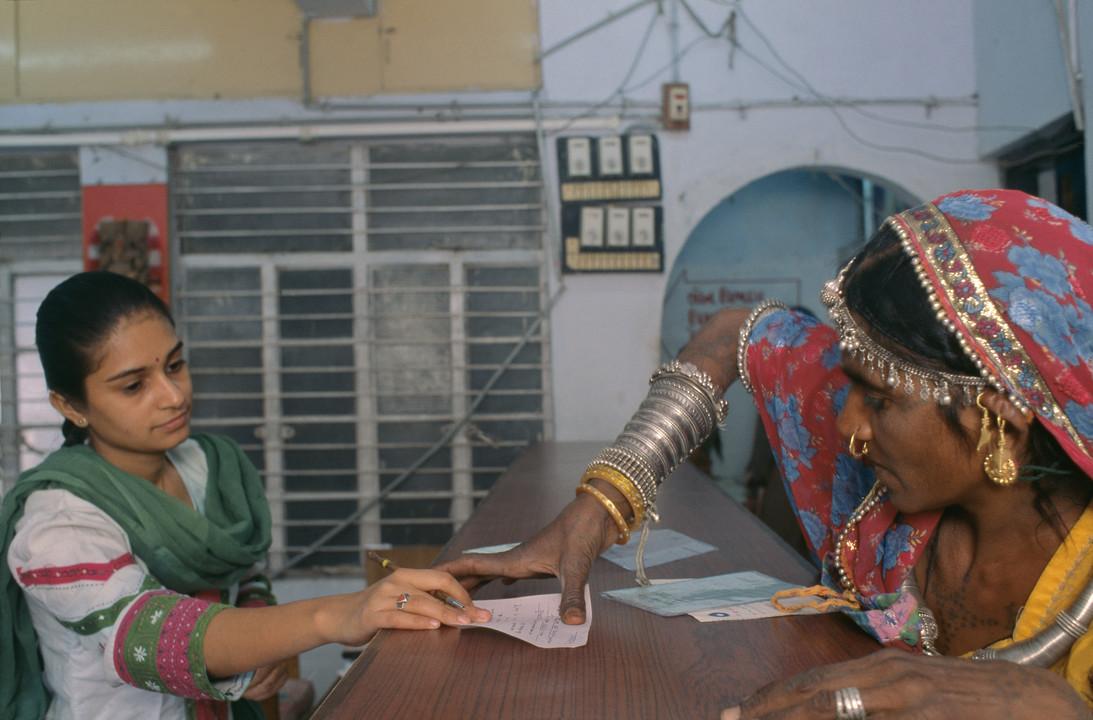
Image Credits: Getty Images
News reports have stated that the Government of India is going to constitute a committee to look at further merger of public sector banks to four to five from the present 12. We had 28 public sector banks. With the merger of seven associate banks of SBI with the parent bank, the number came down to 21. With further merger, the number came down to 12. The mergers were started in 2017.
Effects of merger
This has created many problems.
- Shifting of accounts to private banks: Using merger as an opportunity, private banks encroached high-value borrowers, saying big banks will not be able to provide good service, whereas they can provide personalized service. They also expanded their branches. The result is that the private banks’ share in deposits has increased to 44% from 21%, and advances have increased to 66% from 27%. But public sector banks’ share in deposits has come down from 79% to 56%, and share in advances has come down from 73% to 44%.
- Reduction in public sector bank branches: In 2017, public sector banks had 91,426 branches, which has been reduced to 77,744 branches in 2026. The reduction of branches is more in rural and semi-urban areas, affecting the masses. Whereas the private sector branches, which were 25,970, increased to 43,335 in 2026. Again, more branches increased in urban centres. Hence, merger of public sector banks has directly contributed to increase in private sector bank branches and business.
- Disproportionate increase in private bank staff strength: Public sector banks had 5,50,565 staff in 2017, which has increased to 6,22,203 in 2026. The increase in number is 77,638, and the percentage of increase is 14%. Private banks had 4,13,989 staff in 2017, which has increased to 8,50,000 in 2026. This increase in staff is 4,36,011, and the percentage of increase is 105%, more than double. The private banks do not follow the reservation policy, so the OBCs, BCs, SCs, and STs have been affected. Moreover, the service conditions in private banks are poor when compared to public sector banks.
- Small finance banks to exploit small borrowers: As of 2026, there are 12 small finance banks with 7,641 branches, 1,80,000 staff, Rs. 3.2 lakh crore deposits, and Rs. 3.4 lakh crore advances. These are all in the private sector.
- Reducing small credit: The small credit started reducing after the 1991–92 LPG (Liberalization, Privatization, and Globalization). As of 2025, accounts with a credit limit up to Rs. 25,000 have come down to 15.3%, and the outstanding amount is only 0.2% of total bank credit.
Accounts with a limit up to Rs. 2 lakh have come down to 70.2%, and the amount of outstanding loans up to Rs. 2 lakh has come down to 7.2% of total bank credit. So, the small borrowers are forced to go to small finance banks, microfinance institutions, and non-banking financial companies. All of these charge higher interest and use horrible recovery methods. (Please read RR dated June 20, 2025, and RR dated November 10, 2025, also.)
Compare this with 1991. Accounts with a credit limit up to Rs. 25,000 were 94.90%, and the amount outstanding was 35.9%. With LPG, the position deteriorated, and with merger it has become worse. With further merger, we will have big banks for big rich people, and the small (poor and middle class) will be left to the mercy of modern-day Shylocks – SFBs, MFIs, and NBFCs.
It’s high time to stop this.
Thomas Franco is the former General Secretary of the All India Bank Officers’ Confederation and a Steering Committee Member at the Global Labour University.
Centre for Financial Accountability is now on Telegram and WhatsApp. Click here to join our Telegram channel and click here to join our WhatsApp channeland stay tuned to the latest updates and insights on the economy and finance.
