
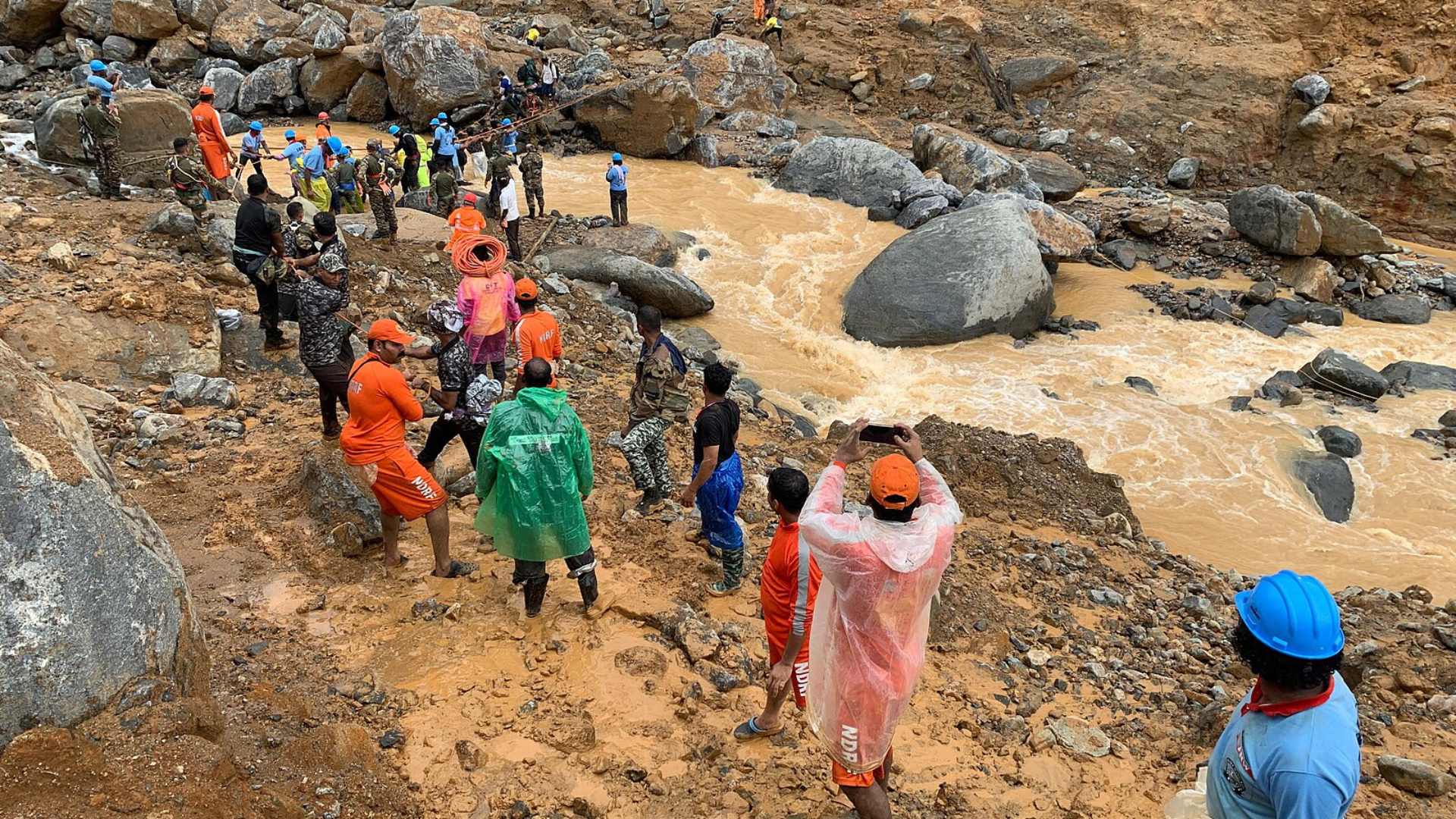
The monsoon is once again showing India’s climate contradiction. A weak monsoon brings fears of drought, lower crop production, rising food prices and reduced rural incomes. Farmers delay sowing, inflation increases, and economic growth slows. But when the rains finally arrive, they often come in short, intense bursts, triggering floods, landslides and infrastructure failures. Instead of providing relief, the monsoon increasingly brings destruction.
The recent landslide at the Anakkampoyil-Kalladi-Meppadi tunnel site in Kerala highlights this second challenge. While heavy rainfall may have triggered the disaster, questions remain about whether repeated safety warnings were ignored, whether excavation debris was managed properly, and whether different agencies responsible for supervision fulfilled their duties. Around the same time, a road cave-in and landslides disrupted the Pune – Mumbai highway, causing massive traffic congestion and exposing the vulnerability of critical transport infrastructure to extreme weather. Similar disasters in Himachal Pradesh, Uttarakhand and Jammu & Kashmir show that this is no longer an isolated problem but part of a larger pattern of climate-driven disasters made worse by poor planning, unchecked construction in fragile ecosystems, and weak enforcement of safety and environmental regulations.
The economic cost of these disasters goes far beyond immediate loss of lives and property. Roads, bridges, railways and power projects are damaged, tourism is disrupted, businesses shut down, and governments spend thousands of crores on relief and reconstruction. At the same time, a weak monsoon raises inflation and reduces agricultural output. India is therefore paying twice, first because of too little rain and then because of too much rain falling in the wrong places and at the wrong time.
The government’s response remains largely reactive. Disaster warnings, environmental regulations and safety guidelines often exist on paper, but implementation and accountability remain weak. Infrastructure projects continue in ecologically fragile areas without adequate safeguards, while climate adaptation receives far less attention than post-disaster relief. As climate change makes weather more unpredictable, India needs stronger environmental governance, scientific planning and strict accountability. Without these, both weak monsoons and extreme rainfall will continue to undermine lives, livelihoods and the economy.
