
South–South climate finance—the flow of climate-related finance from one developing or emerging economy to another—has become an increasingly important, though still relatively small, component of the global climate-finance system. The latest comprehensive assessment by the World Resources Institute (WRI) estimates that 14 major non-Annex II emerging and developing economies provided or mobilised US$102.38 billion for climate action in other developing countries between 2013 and 2023. The flows increased from about US$4.92 billion in 2013 to US$17.1 billion in 2023. China was the largest provider, followed by South Korea, India and Brazil; these four countries together accounted for 72% of the total. Nearly 80% of the 2023 flows passed through multilateral institutions, including development banks and climate funds.
The most important characteristic of this finance is its concentration on mitigation and physical infrastructure, particularly energy and transport. This is partly because renewable-energy and infrastructure projects can be financed through loans and can generate revenues, whereas many adaptation and resilience investments do not.
China : mostly for energy transition and mitigation
China is by far the largest Southern provider. WRI estimated that China provided or mobilised approximately US$45 billion between 2013 and 2022, averaging about US$4.5 billion per year, through bilateral public finance, multilateral finance, export credits and private finance mobilised by public institutions.
A newer Climate Policy Initiative (CPI) assessment, covering 2018–2023, identifies approximately US$20 billion of Chinese South–South climate finance. Of this, approximately US$14 billion went to energy systems, US$3 billion to transport, and US$1 billion to buildings and infrastructure. Thus, roughly 90% of the specifically identified sectoral flows were concentrated in energy, transport, buildings and infrastructure—all central to low-carbon development and energy transition. Tracked Chinese international adaptation finance was described as minimal. China alone provided US$6.5 billion in 2023.
The energy component includes financing relevant to renewable electricity, power systems and the broader transition away from carbon-intensive energy. Transport finance supports low-carbon transport infrastructure, although the available aggregate data do not permit a reliable separation of electric vehicles, railways, public transport and other transport investments. Similarly, the aggregate Chinese figures do not provide a sufficiently robust basis for claiming a specific South–South amount for battery storage or industrial electrification.
India : solar, electricity access and infrastructure
India is the third-largest provider in the WRI assessment, after China and South Korea. Its international development-finance programme is substantially larger than its formally identifiable climate component: India’s Exim Bank had approved more than US$31 billion through 324 Lines of Credit covering 68 countries by 2024. However, this entire amount must not be classified as climate finance because it includes conventional development projects.
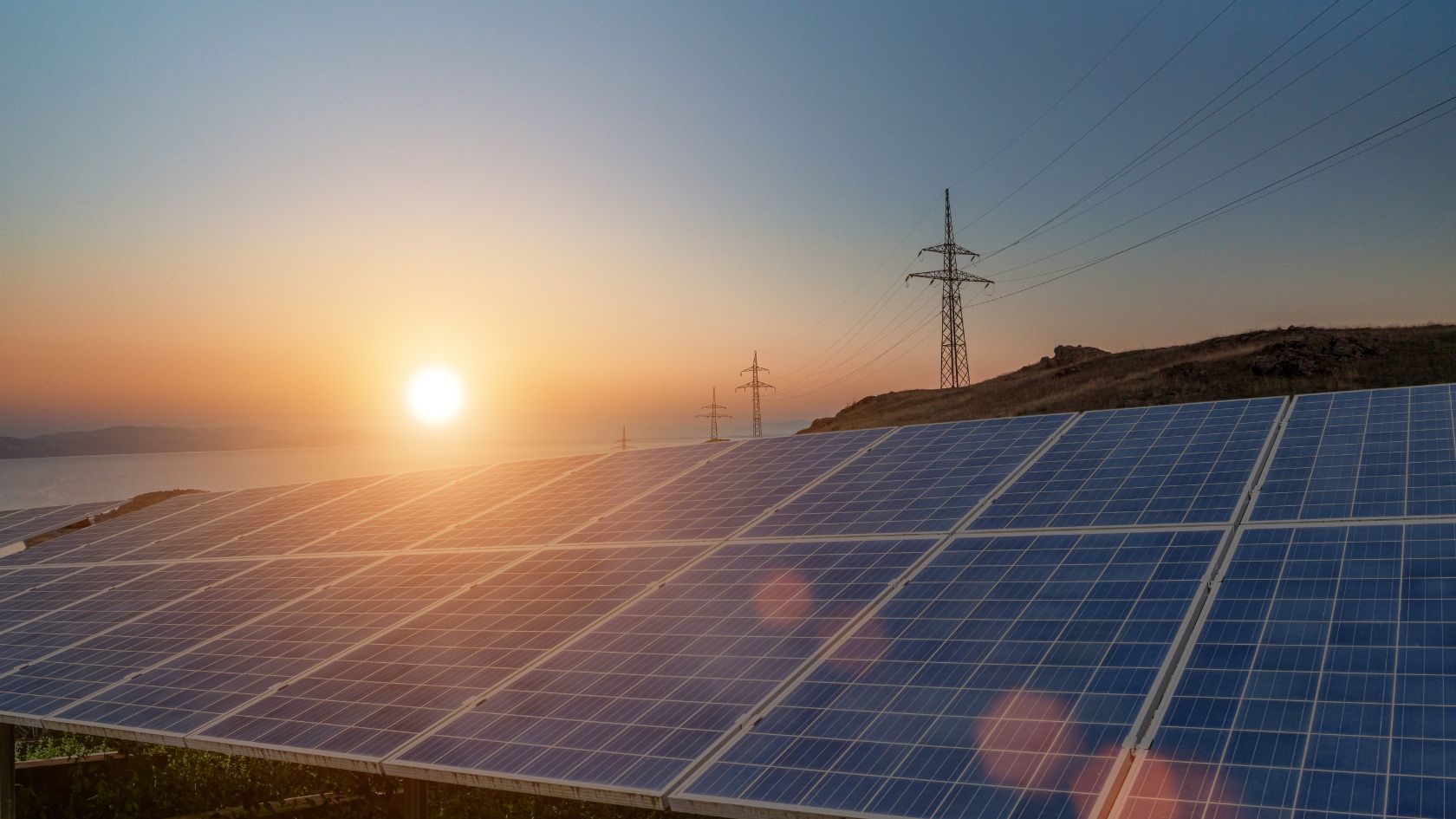
The climate-oriented portion has a particularly strong emphasis on solar energy, electricity access and energy infrastructure, especially in Africa. India committed US$2 billion in concessional credit for solar projects in Africa, while Indian-supported projects have included solar plants, village electrification, solar mini-grids and hydropower. These investments therefore combine mitigation/energy transition with development and energy-access objectives.
India’s approach differs somewhat from China’s large infrastructure model : solar deployment and electricity access are particularly prominent, including decentralised systems appropriate for countries with low electrification rates.
Brazil : forests and land-use mitigation
Brazil was the fourth-largest Southern climate-finance provider, mobilising approximately US$6.57 billion between 2013 and 2023 for climate mitigation and adaptation in other emerging and developing economies.
Brazil’s comparative strength is not primarily overseas energy infrastructure but forests, land use, biodiversity and sustainable development. Its experience with the Amazon Fund illustrates the importance of forest protection and restoration as climate mitigation, while also supporting local livelihoods and resilience.
New Development Bank / ‘BRICS Bank’ : mitigation plus adaptation
The New Development Bank (NDB) provides a distinctly Southern multilateral channel. In 2024 it approved approximately US$2.5 billion of climate finance, representing more than half of its total approvals. Its cumulative climate-finance portfolio was approximately US$8.1 billion, comprising about US$6.5 billion for mitigation and US$1.6 billion for adaptation.
The NDB therefore provides one of the clearest examples of a Southern institution financing both energy transition/low-carbon infrastructure and adaptation/resilience.
The major gap : adaptation and the poorest countries
The geographical and sectoral distribution of South–South finance remains problematic. WRI finds that, among the 14 countries studied, highly vulnerable low-income countries received only about 8% of non-multilateral climate-finance flows.
There is also a strong adaptation imbalance. Apart from China, adaptation accounted for approximately 53% of non-multilateral finance from the other 13 providers in the WRI study. China, however, remains strongly mitigation-oriented.
This is significant because poorer countries often need finance for flood protection, drought resilience, heat adaptation, water security, disaster-risk reduction, climate-resilient agriculture and early-warning systems—investments that generate major social benefits but generally produce less direct financial revenue than renewable-energy projects.
Overall assessment
South–South climate finance has therefore developed into a genuine, measurable financial stream, but it remains modest relative to global requirements. The US$102.38 billion provided by 14 major developing economies over 2013–2023 is significant, but the annual flow of US$17.1 billion in 2023 remains far below the scale required for developing-country climate action.
The emerging pattern is clear: China dominates large-scale energy, transport and infrastructure finance; India has a distinctive emphasis on solar energy and electricity access; Brazil is particularly important for forests and land-use mitigation; and the NDB provides a growing Southern multilateral channel combining mitigation and adaptation.
The next stage should be a much more transparent South–South climate-finance reporting system, with separate accounting for mitigation, adaptation, energy transition, resilience, grants, concessional loans, market-rate finance and private capital mobilised. This would make it possible to determine not merely how much money is flowing between developing countries, but which countries are receiving it, for what climate purpose, and on what financial terms.
The main data sources used :
- World Resources Institute (WRI), Beyond the Usual Suspects (2026); WRI’s China international climate-finance database;
- Climate Policy Initiative (CPI);
- New Development Bank (NDB);
- Government of India/Exim Bank data.
