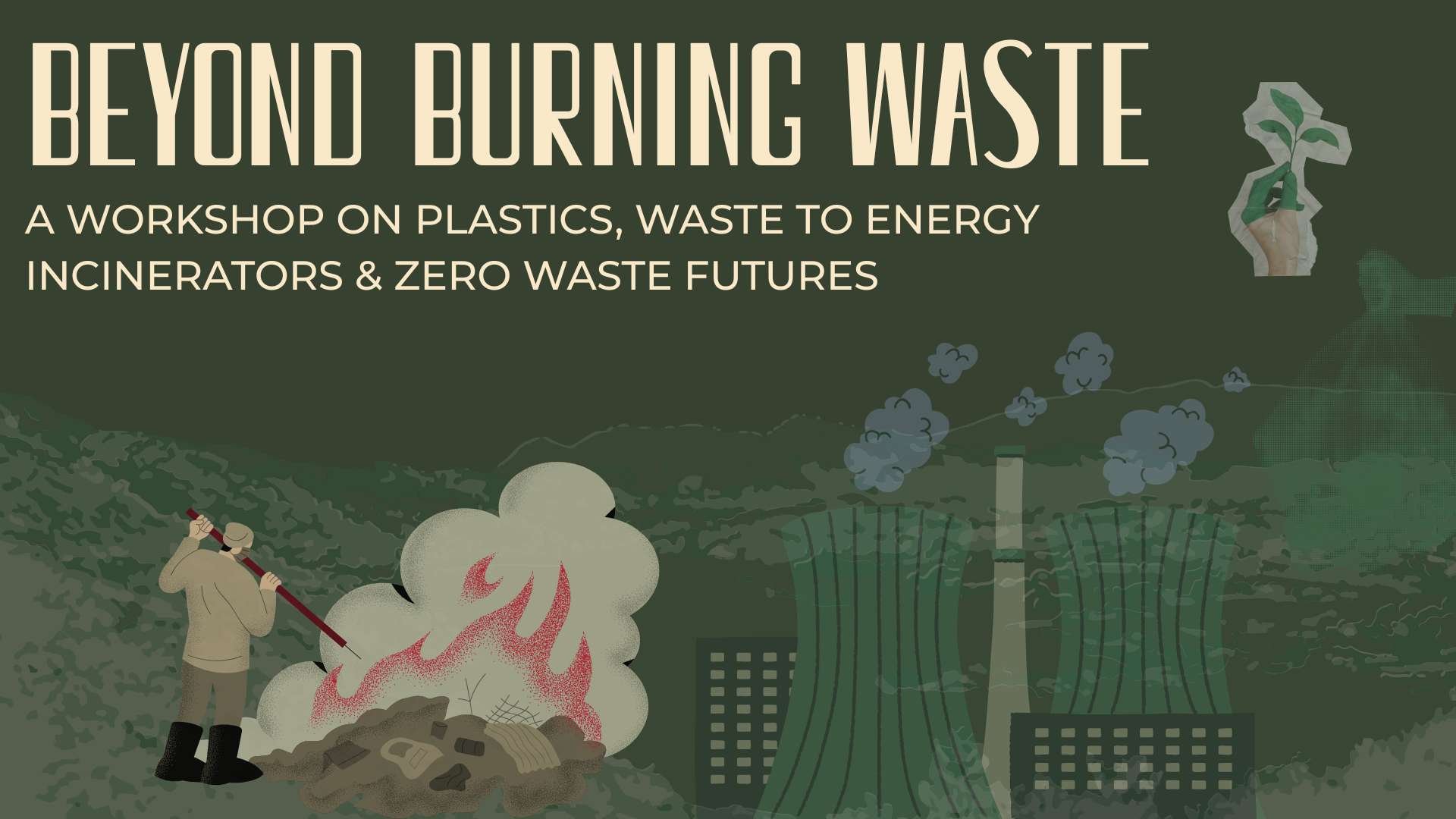
A Workshop on Plastics, Waste to Energy Incinerators & Zero Waste Futures
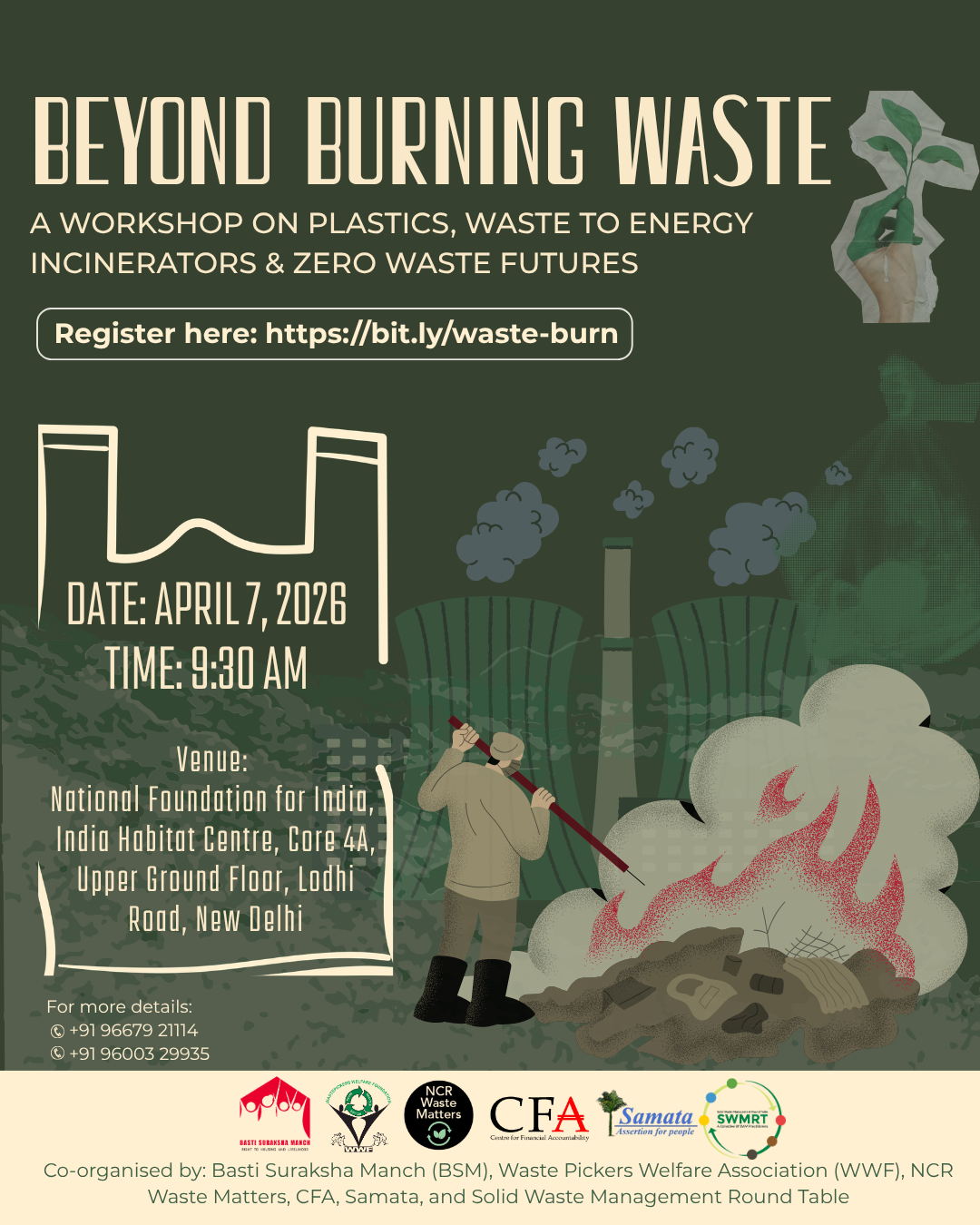
Date and Time: April 07, 2026 | 9:30 AM
Venue: National Foundation for India, India Habitat Centre, Core 4A, Upper Ground Floor, Lodhi Road, New Delhi
Register here: https://forms.gle/xabCELQ4aUAtfWHE9
Delhi’s solid waste management system is at a critical juncture. The rapid expansion of Waste-to-Energy (WTE) incineration facilities is being promoted as a technological fix for the city’s mounting waste crisis, particularly plastic waste. At the same time, the production and consumption of multi-layered plastics (MLPs) and single-use plastics (SUPs) continue unabated, despite well-documented environmental, health, climate, and livelihood impacts.
Plastics have impacts across their entire lifecycle—from fossil fuel extraction and polymer production, to consumption, waste management, incineration, and disposal. WTE plants, while framed as solutions, often externalise costs in the form of air pollution, greenhouse gas emissions, toxic ash, and the displacement of informal waste workers whose livelihoods depend on recycling-based systems.
Delhi is already having the worst AQI for a metropolitan city in the world and burning 7,250 tons of waste in the cities four WTEs worsens the air quality of Delhi. Furthermore, it is not brought under the GRAP protocol. Delhi is home to a vibrant ecosystem of researchers, practitioners, policymakers, waste worker collectives, and youth-led climate groups. However, these conversations often remain fragmented—technical discussions on waste infrastructure are disconnected from climate justice, labour, and livelihood concerns. There is a pressing need for a shared space to critically examine plastics and WTEs through a lifecycle lens, foregrounding climate impacts, social justice, and alternative pathways such as zero waste cities.
This one-day workshop aims to create such a space, using a short film screening as an entry point, followed by freewheeling, participatory discussions that bring together diverse stakeholders. The workshop will also explore possibilities for longer-term collaboration particularly around research and action-oriented studies involving CSOs, waste pickers and the political economy of MLPs and SUPs.
Objectives
- To build a shared understanding of the lifecycle impacts of plastics, with a focus on climate, health, and urban ecological consequences.
- To critically examine the role of Waste-to-Energy incineration in Delhi’s solid waste management system, including its implications for emissions, public health, and waste picker livelihoods.
- To foreground the voices and perspectives of informal waste workers and highlight how WTEs and non-recyclable plastics threaten recycling-based livelihoods.
- To discuss the vision and practical pathways for zero waste cities in the Indian urban context.
- To collectively identify next steps for research, advocacy, and collaboration, including the possibility of formalising a partnership with various partnering CSOs.
Target Participants
- Active citizens working on Solid Waste Management
- PhD scholars and early-career researchers working on urban studies, environment, and climate change
- Youth-led climate change groups and student activists
- Practitioners and civil society organisations working on waste, plastics, and environmental justice
- Representatives of waste picker collectives
Workshop Format and Methodology
The workshop will be highly participatory and discussion-driven. It will combine: Presentations, Case studies and Film screening etc to provide a common narrative and provoke discussion on plastics across their lifecycle – Freewheeling plenary discussions to unpack key issues around plastics, WTEs, and climate impacts – Breakout group discussions focused on zero waste pathways, livelihoods, and future actions – Collective reflection on research gaps and institutional collaborations
Organisers: Basti Suraksha Manch, Waste Pickers Welfare Association, NCR-Waste Matters, CFA, Samata, and Solid Waste Management Round Table ( SWMRT )