
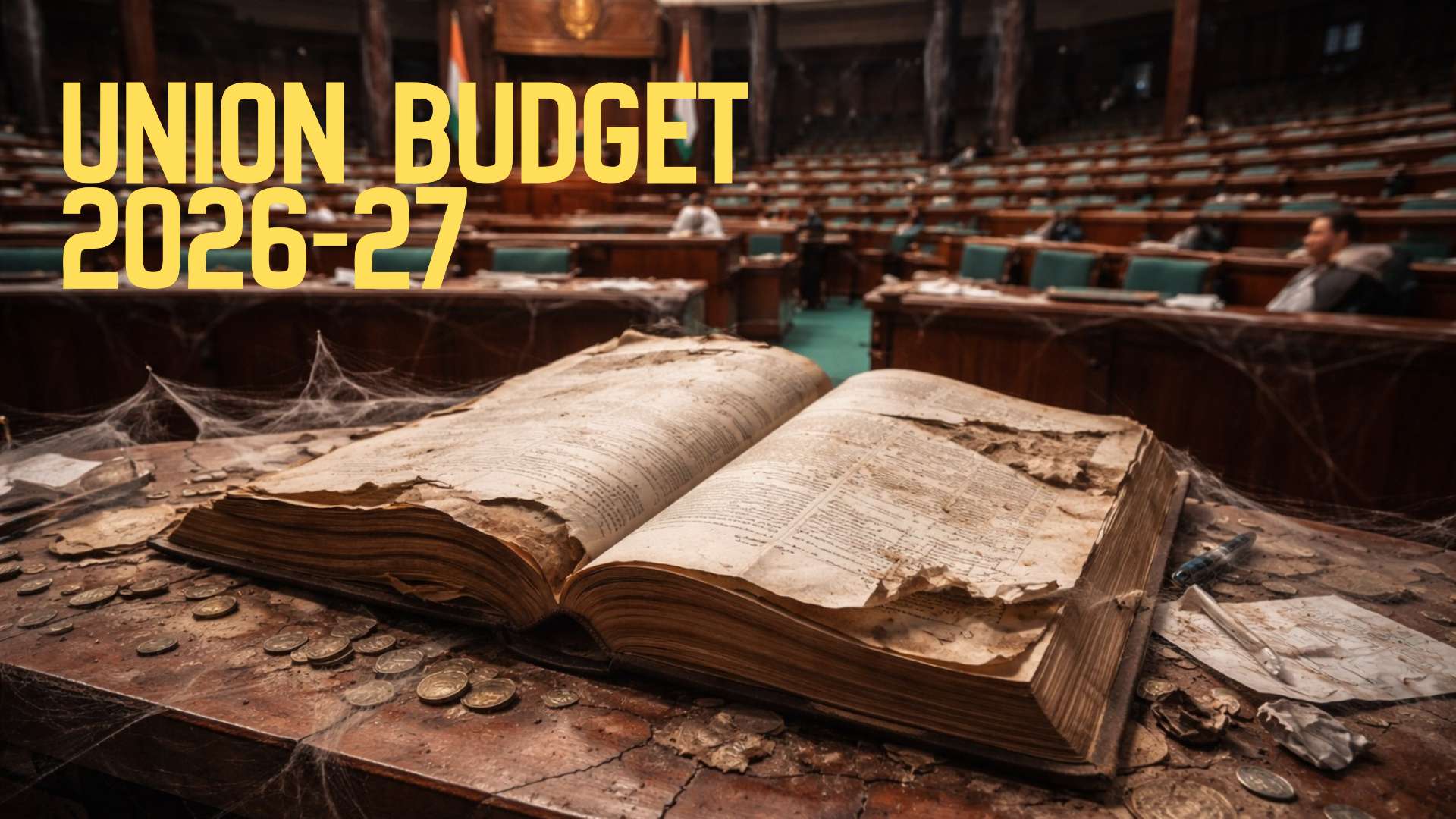
 Budgets are supposed to deliver the promises made by the ruling party, address challenges before the economy, and achieve the constitutional goals. One of the most important constitutional goals is to bring down inequality and provide equal opportunity to all. When income inequality is increasing, it is expected that the budget will take efforts to reduce the same.
The Budget should also provide a fact sheet of the promises fulfilled which were given in the election manifesto as well as in the previous budgets. The budgets presented by Ms. Nirmala Sitharaman have not cared to do that. She believes that rhetoric and slogans will work; people’s memory is poor, and polarisation of citizens in the name of religion is sufficient. Probably the FM is so confident that the Election Commission of India will take care of the results even if the economy fails, and the corporates will save her.
Let us have a brief look at some of the major promises made by BJP in 2014, 2019, and 2024:
2014 Manifesto
- Price rise will be brought down and a food inflation report by a committee chaired by Shri Modi as CM will be acted upon
- Special Court to stop hoarding and black marketing
- Price stabilisation fund will be created
- Abolition of black money
- Elimination of corruption
- Improve Centre-State relationship — national development driven by states
- Empower Gram Sabhas and Panchayat Raj
- Eliminate criminals from politics
- Bridge gap in inequality
- Provide equal opportunity for minorities
- Support for SC, ST, OBC
- Beti Bachao — Beti Padhao
- National Youth Advisory Council
- 6% of GDP to education
- The welfare of senior citizens — financial support, tax benefits, and higher interest rates
- The labour force as a pillar
- Agri Rail Network
- MSP will be 50% profit above the cost of production, cheaper inputs for agriculture, and low interest
- Welfare measures for farmers above 60 years
- GM foods will not be allowed without scientific evaluation
- Set up an MSME Bank
- Pucca house to all by 2022
After 11 years, we are still waiting for these promises to be fulfilled.
Election Manifesto of 2019
- Farmers’ incomes will be doubled by 2022
- ₹25 lakh crore investment in agri-rural sector
- Piped water in all houses by 2024
- High-speed optical fibre network for net connectivity to all Gram Panchayats by 2022
- ₹100 lakh crore for infrastructure by 2024
- Ensure MSP
- Pension scheme for small and marginal farmers
- Complete irrigation throughout the country
- Short-term loan of ₹1 lakh to agriculturists at 0% interest
- ₹1 lakh crore for higher education
- Atal Tinkering Lab for every block
- All rail routes to be broad gauge by 2022
- Electrification of all tracks by 2022
- All railway stations will have free Wi-Fi
- Dedicated freight corridor by 2022
- 5 lakh health and wellness centres
- 75 medical colleges
- Doctors-to-patient ratio — 1:1400
- Double export
- National Traders Welfare Fund
- Clean Ganga by 2022
Six years have passed. Most of the promises are not fulfilled.
Manifesto 2024
- The party will continue to provide free and quality healthcare services of up to ₹5 lakh to poor families under the Ayushman Bharat scheme.
- Free electricity to poor households under the Prime Minister Surya Ghar Muft Bijli Yojana.
- Efforts to empower three crore rural women to become Lakhpati Didis.
- Integration of women self-help groups (SHGs) with the service sector,enhancing market access for women SHG enterprises: Ensuring development of infrastructure, such as working women’s hostels and crèches, with a
specific focus on locations near industrial and commercial centres to facilitate increased participation of women in the workforce. - Expansion of the existing health services, focusing on prevention and reduction of anaemia, breast cancer, cervical cancer, and osteoporosis, ensuring a healthy life for women.
- Launching a focused initiative to eliminate cervical cancer.
- Implementation of the Nari Shakti Vandan Adhiniyam to ensure representation of women in Parliament and the State Legislatures.
- A transparent government recruitment system.
- Enactment of a law to prevent paper leaks.
- Expansion of the Ayushman Bharat Yojana to cover senior citizens and provide them access to free and quality healthcare. Delivery of government services at doorsteps to ensure seamless access to social security benefits and other essential government services for senior citizens by leveraging the extensive reach and reliability of the postal and digital network.
- Strengthening the Prime Minister Kisan Samman Nidhi scheme to provide sustained financial support to farmers.
- Strengthening the Prime Minister Fasal Bima Yojana through more technological interventions to ensure speedy and more accurate assessment, faster payouts, and quicker grievance resolution.
- Increasing the minimum support price (MSP) for crops.
- Launching the Krishi Infrastructure Mission for integrated planning and coordinated implementation of agri-infrastructure projects like storage facilities, irrigation, grading and sorting units, cold-storage facilities, and foodprocessing.
- Expansion of irrigation facilities, launching technology-enabled irrigation initiatives to implement cutting-edge technology for efficient water management.
- Launching an indigenous Bharat Krishi satellite for farm-related activities like crop forecasting, pesticide application, irrigation, soil health, and weather forecasting.
- A periodic review of the national floor-level minimum wages.
- Inclusion of autorickshaw, taxi, truck drivers, and other drivers in all social security schemes.
- Empowerment of small traders and MSMEs through the Open Network for
- Digital Commerce (ONDC) to help them expand their businesses using technology.
- A focused approach for tribal healthcare, measures to eliminate malnutrition among tribal children, and providing comprehensive healthcare services in tribal areas on a mission mode.
- Measures to eliminate sickle-cell anaemia.
- Modi ki Guarantee for a secure and prosperous Bharat.
- Robust infrastructure along the borders, technological solutions on the fenced portions to make fencing smarter.
- Making India the third-largest economy in the world.
- Expansion of employment opportunities.
- Measures to make India a global manufacturing hub in various sectors, including electronics, by 2030.
- Modi ki Guarantee on good governance.
- Quality education, establishing new institutions of higher learning.
- Balanced regional development, maintaining peace in the Northeast.
- Resolution of inter-State border disputes among the north-eastern States through sustained efforts.
The Finance Minister is expected to present a report card on all these promises. But she doesn’t care.
Now let us see some of the earliest budget promises:
2014–2015 — Arun Jaitley
- 2 bank accounts for every house with loan credit
- Revitalise small savings
- Pilgrimage rejuvenation — PRASAD
- National City Heritage Development (HRIDAY). Kancheepuram and Velankanni were in the list of 6 places with a promise of Rs. 200 crore.
- Sarnath–Gaya–Varanasi — Buddhist Circuit
- Rs. 2,037 crore Namami Ganga (one year alone).
- Sports University in Manipur (It has enrolled only 184 persons so far.)
- Organic food promotion for North East (I was there a few months before. Even Sikkim is not producing much organic food now.) There is no restriction on chemical fertilisers and pesticides.
2015–2016 — Arun Jaitley
- Housing for all by 2022
- 24-hour power supply to all houses.
- At least one job for one family
- All villages to be electrified by 2020
- 2 lakh km of all-weather roads to villages
- Medical facility in all villages
- Universal Social Security System
- Senior Citizens’ Welfare Trust & support for equipment
- NAI MANZIL for minorities to have formal school education
- Visas on arrival for 150 countries
- One major central institute in every state
Ms. Nirmala Sitharaman also keeps promising many things in the budget but forgets to follow up.
In 2021–22
- She promised 7 textile parks; not completed yet due to inadequate funds.
- Mission Poshan 2.0. Out of 2 lakh Anganwadis promised for upgrade, only 94,000 have been upgraded till now.
- Higher Education Commission of India. After 3 years, still at bill-drafting stage.
- Economic Corridor for Tamil Nadu, Kerala, West Bengal, and Assam. Nothing much has happened, and Budget 2026 is talking about Rare Earth Corridor.
- Metrolite and Metroleo for Tier I and II cities — none completed so far. Only a few are under progress.
- Hydrogen Energy Mission. Not much progress. Adani and Ambani have been roped in.
- Deep Ocean Mission to survey exploration projects for conservation of biodiversity — instead of conservation of biodiversity, the mission has so far concentrated on ocean mineral exploration, integrated mining, etc. Biodiversity study and mapping are only to divert attention.
This narrates the gaps between promises and ground-level action.
In 2022–23
- 400 new Vande Bharat trains in 3 years. After 3 years, only 164 trains are running.
- 25,000 km national highway. Due to non-achievement, reduced to 10,000 km. AGAINST TARGET OF 2 LAKH KM ANNOUNCED IN 2015, ONLY 1,46,560 KM ACHIEVED BY 2025.
- CAG audit has exposed huge cost escalation indicating corruption. Nothing has been done, and corruption continues.
What has been announced in 2023–24 and 2024–25 has not been analysed, as most of them have not shown much progress. But the disinvestment targets are not achieved; Capex announced has not been spent, and the stimulus through private investment has not happened. The increase in farm loans from 3 lakhs to 5 lakhs with interest subvention for 7.7 crore farmers, fishermen, and dairy farmers has not been implemented so far. The 5-year mission for cotton farmers has not started yet. The National Mission for high-yielding seeds is not seen yet. Small modular reactors have not started. Rs. 500 crore for AI tools also has not been seen. UDAN to cover 120 new air destinations has not been implemented. Rather, 15 existing airports have become defunct. The Urban Challenge Fund of Rs. 1 lakh crore is still in the pipeline after a year. The employment generation scheme through corporates has been such a disaster that the Government has stopped talking about it. The Rs. 100 lakh crore for infrastructure before 2024 has not been fulfilled. So the FM is only selling dreams without any real intent to fulfil them.
Dangerous Precedence and Proposals
The media has been talking about the Kancheepuram saree worn by the FM and the budget presented on a Sunday for the first time. It is an insult to Christians, including a few MPs in Parliament who are Christians.
Some of the dangerous proposals are:
- High Power Committee on banking: This is to recommend privatisation of the public sector banks without discussion in Parliament.
- Rare Earth Corridor: To provide access to the private sector to mine rare earth and to export to the USA, which wants to compete with China in this area.
- Container Production: To help Adani.
- Shipping expansion: Again for Adani.
- A tax holiday until 2047 has been granted to foreign companies providing global cloud services using Indian data centres, provided services to Indian customers are routed through an Indian reseller. Further, the tax holiday for units in the International Financial Services Centre (IFSC) and Offshore Banking Units has been increased from 10 to 20 years. Income of IFSC units will be taxed at 15% after this period. This will directly help Mukesh Ambani and GIFT City, Gujarat.
- Rationalisation of penalty and prosecution: Several offences have been decriminalised or entail a maximum imprisonment of two years.
- An incentive of Rs. 100 crore has been announced for single bond issuance of more than Rs. 1,000 crore to encourage issuance of municipal bonds. Instead of giving funds, the municipalities are asked to borrow.
- Three All India Institutes of Ayurveda will also be established. Not one for Siddha, which has proved well during COVID and beyond.
- Disinvestment is the government selling its stakes in Public Sector Undertakings (PSUs). In 2025–26, the government is estimated to meet 71.9% of its disinvestment target. The disinvestment target for 2026–27 is Rs. 80,000 crore, higher than the budget target of 2025–26 (Rs. 47,000 crore). This marks the first increase in the disinvestment target after five consecutive years of downward revisions and shortfalls in achieving the targets. This is in spite of the Economic Survey’s appreciation of PSU performance.
- Borrowings: Outstanding liabilities are the accumulation of borrowings over the years. A higher debt implies that the government has a higher loan repayment obligation over the years. Centre’s outstanding liabilities in 2026–27 are estimated to be 55.6% of GDP. Outstanding liabilities rose between 2018–19 and 2020–21, reaching a high of 61% of GDP in 2020–21, and have moderated thereafter. The government aims to reduce the outstanding liabilities to around 50% ± 1% of GDP by March 2031. Interest payments as a percentage of revenue receipts increased from 37% in 2013–14 to 42% in 2020–21. It is estimated to be 40% of revenue receipts in 2026–27. To show that the fiscal deficit has reduced to 4.4% of GDP, the income estimates are projected high, though the actuals will be less.
Lessons Not Learnt from the Economic Survey
While lauding the Government’s performance and projecting growth in India in spite of global uncertainty, the Economic Survey has pointed out a few areas of concern which have not been addressed by the Budget.
- The Survey has pointed out the increasing dependence on NBFCs and MFIs and indicated the dangers. But the FM is not bothered, as it affects the poor and middle class only, including micro and small enterprises.
- The Survey has pointed out that large corporates can withstand shocks which medium, small, and micro enterprises cannot. But no efforts have been made to address the concern of the CEA.
- The Survey has suggested making India an entrepreneurial state. But no efforts are visible to provide equity, easy access to credit, interest subsidy, and marketing support.
- The Survey has expressed concern about employment, which has been ignored in the Budget.
So it is clear that the Budget has not kept the promises of the party to which the FM belongs, provides data which are not accurate and dependable, and sells dreams without any intent to fulfil them. Hence, it is a farce.
Thomas Franco is the former General Secretary of All India Bank Officers’ Confederation and a Steering Committee Member at the Global Labour University.
Centre for Financial Accountability is now on Telegram and WhatsApp. Click here to join our Telegram channel and click here to join our WhatsApp channel and stay tuned to the latest updates and insights on the economy and finance.
