
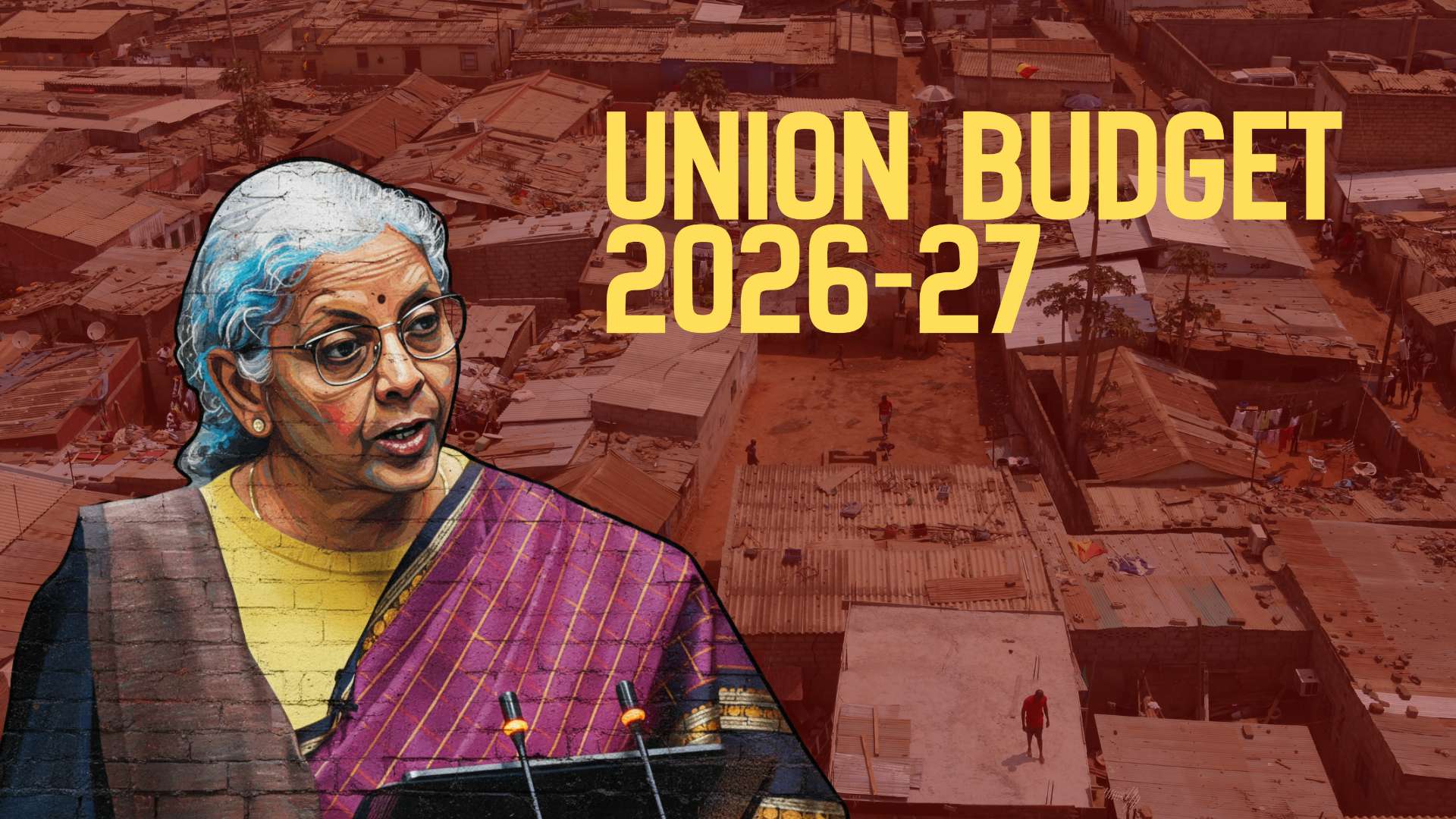
 If one were to rely on the official data released by the government, India’s economy is claimed to be in a comfortable position today on four key parameters—high growth rate, global ranking in Gross Domestic Product (GDP), contained inflation, and a controlled fiscal deficit. In such a situation, it was reasonable to expect that this Budget would take concrete policy measures to generate employment, address the structural crisis in agriculture, and bring about a tangible increase in the purchasing power of the common citizen. However, on all these counts, the Budget has proved to be deeply disappointing.
What is particularly striking is that this Budget appears directionless despite the absence of any immediate electoral pressure. While it touches upon a wide range of sectors—from semiconductors to the coconut industry—it fails to present a coherent, long-term, and integrated economic vision. As a result, the Budget remains a mere compilation of announcements rather than a document of strategic policy significance.
From the perspective of the financial and banking sector, the contrast between pre-Budget speculation and actual announcements is stark. In the run-up to the Budget, the media had actively fuelled discussions around further bank mergers, privatisation, and the future of public sector banks. Yet, the Budget itself contains no concrete declaration on these issues. The only notable announcement is the constitution of a high-level committee to prepare the financial sector for the needs of a growing economy. This clearly indicates the government’s attempt to avoid substantive debate and criticism on these sensitive issues under the cover of the Budget exercise.
The real and fundamental challenges facing the Indian economy today lie elsewhere. Employment generation remains central—but not employment that is contractual, precarious, or outsourced in nature. What is needed is dignified and secure employment that fulfils the constitutional promise of enabling citizens to live a life of dignity. Alongside this, rising economic inequality, declining public investment in health and education, the prolonged agrarian crisis, and stagnation in the manufacturing sector constitute the true challenges before the economy.
Clear and credible answers on how these challenges would be addressed were expected from this Budget. If the government’s claim that the Indian economy is strong and dynamic is indeed true, then a fundamental question arises—why are domestic private investors and foreign investors alike hesitant to invest at the required scale? The Budget had an opportunity to resolve this contradiction, but it has failed to do so.
In sum, this is a Budget that appears successful in numerical terms but remains disconnected from the lived socio-economic realities of the people. It raises more questions than it answers—and falls short where it matters the most.
Devidas Tuljapurkar is the Chairman of Banking Education, Training and Research Academy


