
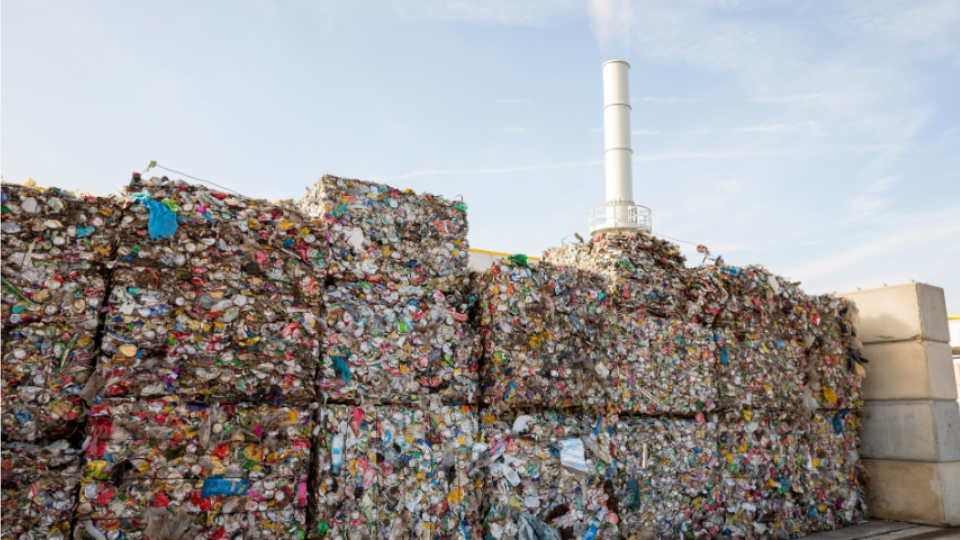
These plants flag emission of heavy metals, cancer-causing chemicals.
Bengaluru: The much-touted waste-to-energy (WtE) plants are a disaster for the environment and the ‘Blue’ category classification of such industries belies the ‘extreme levels’ of pollution generated by them, says a new study by Centre for Financial Accountability.
Grounded “entirely” in official records and technical documents issued by the Central Pollution Control Board (CPCB) and other officials documents obtained from different government agencies, the study concluded that the ‘Blue’ category introduced in January 2025 for waste management and other sectors labeled under ‘essential environmental services’ keeps the public in dark about the hazards of WtEs.
The study by Surabhi with research direction by Chythenyen Devika Kulasekaran said WtEs and other toxic facilities like landfills are regulated under the Environmental Impact Assessment (EIA) Notification 2006. Moving them to ‘Blue’ category will remove that regulation and expert oversight, community consultation and scrutiny.
It noted that while common pollutants like dust (PM) are easier to filter persistent organic pollutants like dioxins and furans, associated with cancer and immune system damage and other health impacts, emitted by the plants threaten public health. “CPCB reports highlight that none of the 21 waste-to-energy (WTE) facilities operating across India are compliant with all the monitored emission parameters,” it said, pointing to emission of dioxins, furans, and heavy metals.
The failure to filter heavy metals like lead, mercury and cadmium only adds to the hazards. “This non-compliance indicates that the existing pollution control technology in these 21 plants is either insufficient or improperly operated, posing a direct toxicological risk to the air, soil, and food chain in surrounding areas,” the study noted.
Apart from such pollutants, WtE plants produce multiple streams of industrial wastewater like leachate, ash quenching effluent, scrubber water and large volumes of hazardous ash requiring secured disposal.
The study said evaluation of the WtE plants pollution index against the CPCP’s 2016 framework as well as the revised one from 2025 leaves no doubt that they belong to the highly polluting ‘red’ category.
“Falsely advertised as a solution to waste crises, WTE incineration fails to address the waste crisis, which is rooted in overproduction and consumption. These facilities are also climate regressive, emitting 68% more greenhouse gases per unit of energy than coal plants. The diversion of public money towards WTEs effectively starves genuine, cost-effective circular economy initiatives dioxins and furans are highly complex organic chemicals that form when plastic and mixed,” it added.
In a note Chaithenyen said the ‘polluter pays’ principle should be enforced strictly against such plants and the CPCB should end the self-assessment mechanisms for high-risk industrial units.
This article was originally published in the Deccan Herald you can read it here.
