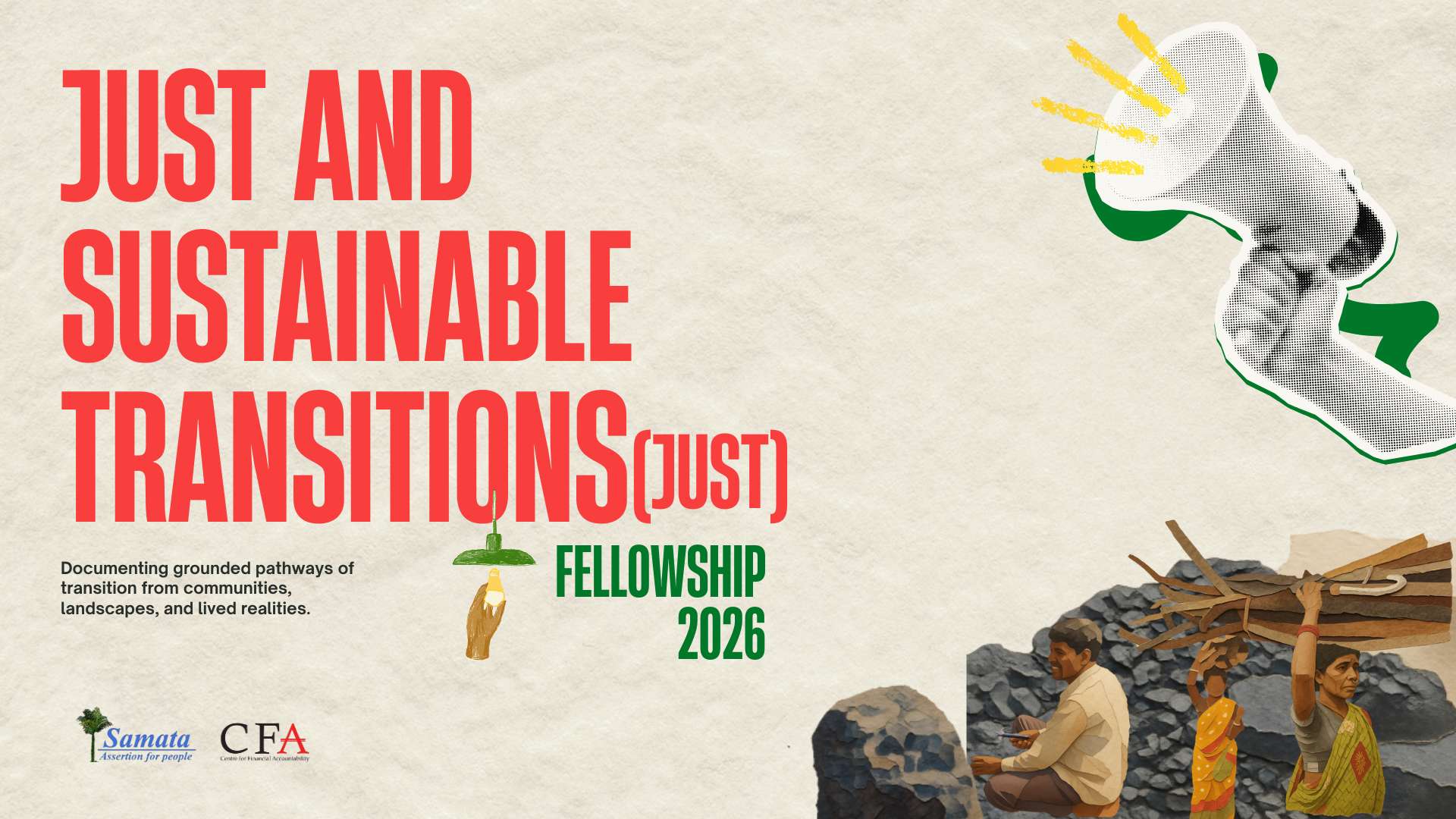
Documenting grounded pathways of transition from communities, landscapes, and lived realities
An initiative by Samata and Centre for Financial Accountability
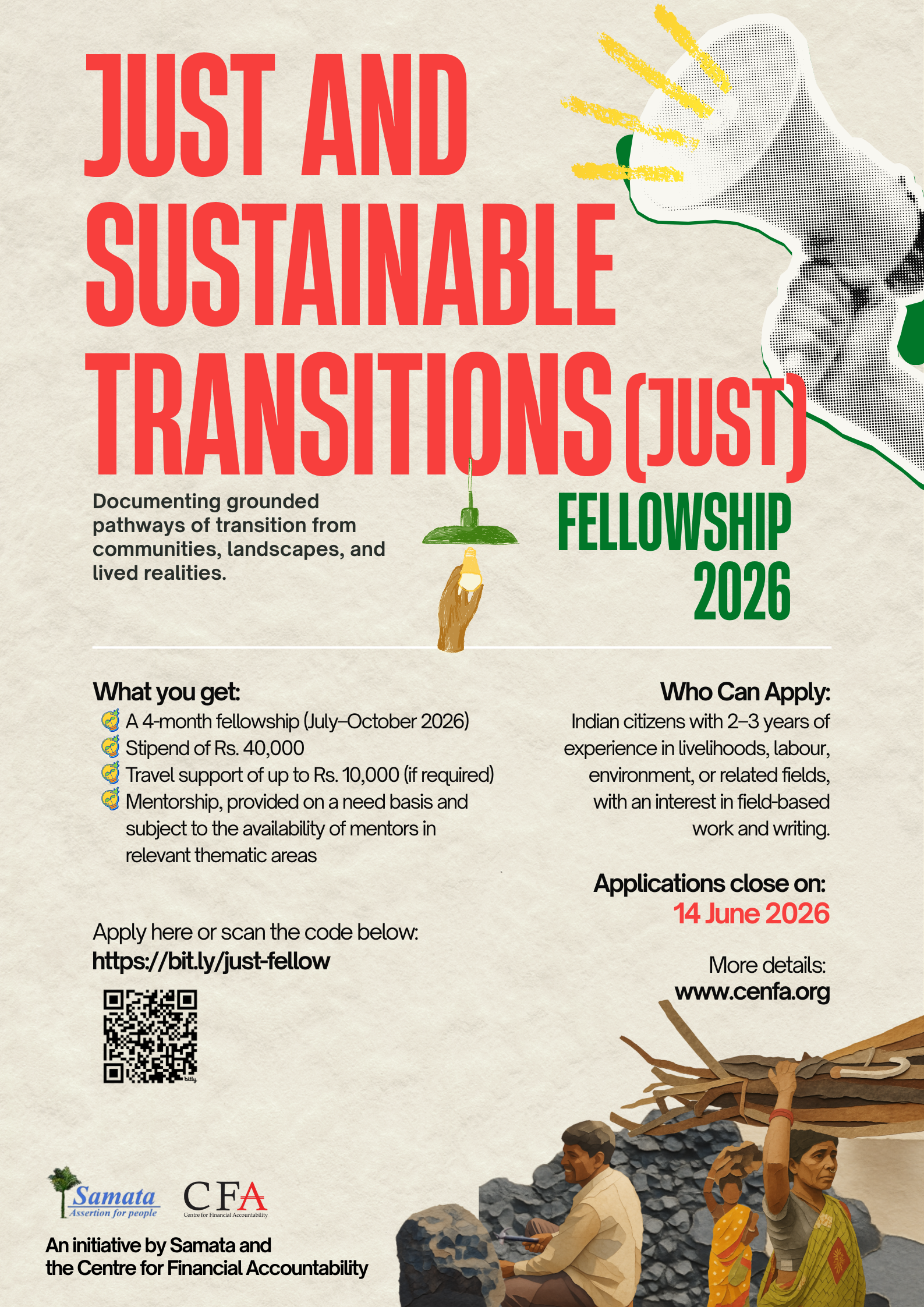
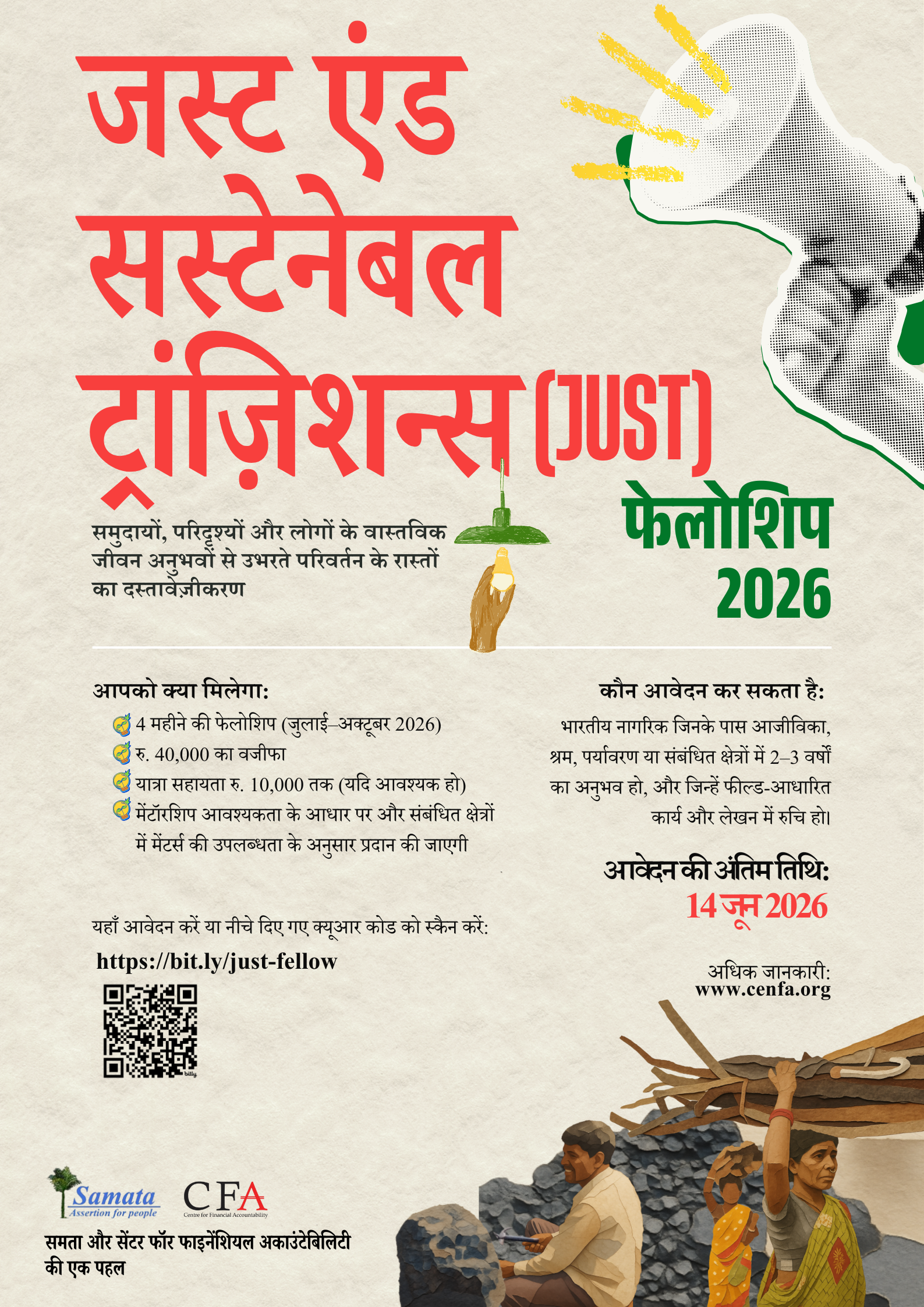
The JUST Fellowship is a four-month, field-based fellowship that seeks to document and engage with the realities of ecological, economic, and social transitions unfolding across India. The fellowship is rooted in the understanding that a just transition is not limited to moving away from fossil fuels, but involves broader questions of livelihoods, land, ecology, governance, labour, public finance, and community agency.
Across mining regions, industrial corridors, agricultural landscapes, energy transition zones, forests, coasts, and infrastructure projects, communities are experiencing profound changes, often marked by displacement, loss of livelihoods, ecological degradation, and deepening inequalities. At the same time, many communities, collectives, and local institutions are also imagining and practising alternative pathways rooted in ecological sustainability, decentralised economies, democratic governance, and livelihood regeneration.
The fellowship aims to create space for grounded documentation of these tensions, transitions, and possibilities through field-based research and storytelling. Fellows will engage directly with affected communities and explore how transitions are being shaped, contested, and negotiated on the ground. The programme encourages attention to questions such as post-extractive futures, resource governance, ecological restoration, labour transitions, public finance mechanisms, and community-led alternatives.
The fellowship does not sit neatly within journalism, academia, or policy analysis, but instead attempts to bridge these spaces through accessible, context-rich, and field-driven work. It seeks to contribute to a growing body of knowledge and public discourse on equitable, democratic, and ecologically grounded futures.
Fellowship Focus Areas
The fellowship may engage with themes including (but not limited to):
- Mining and resource extraction regions
- Energy transition corridors
- Industrial and emerging industrial zones
- Agriculture and agroecological transitions
- Ecological restoration and conservation landscapes
- Transport, steel, infrastructure, and urban transitions
- Post-extractive futures and community-led governance
- Public finance, welfare systems, and institutional mechanisms linked to transition
What You Get
- A 4-month fellowship (July–October 2026)
- Stipend of Rs. 40,000
- Travel support of up to Rs. 10,000 (if required)
- Mentorship, provided on a need basis and subject to the availability of mentors in relevant thematic areas
Who Can Apply
Indian citizens with 2–3 years of experience in livelihoods, labour, environment, ecology, governance, public policy, media, or related fields, with an interest in field-based work, documentation, and writing.
Researchers, journalists, practitioners, independent writers, and grassroots workers are encouraged to apply.
Fellowship Outputs
Selected fellows will produce:
- One long-form article (6,000–8,000 words)
- One short public-facing article/op-ed (800–1,200 words), developed as a concise, public-facing version of the long-form article, adapted for wider dissemination.
The long-form pieces will be compiled into a collective publication by the organisers.
Applications Close On: 14 June 2026