
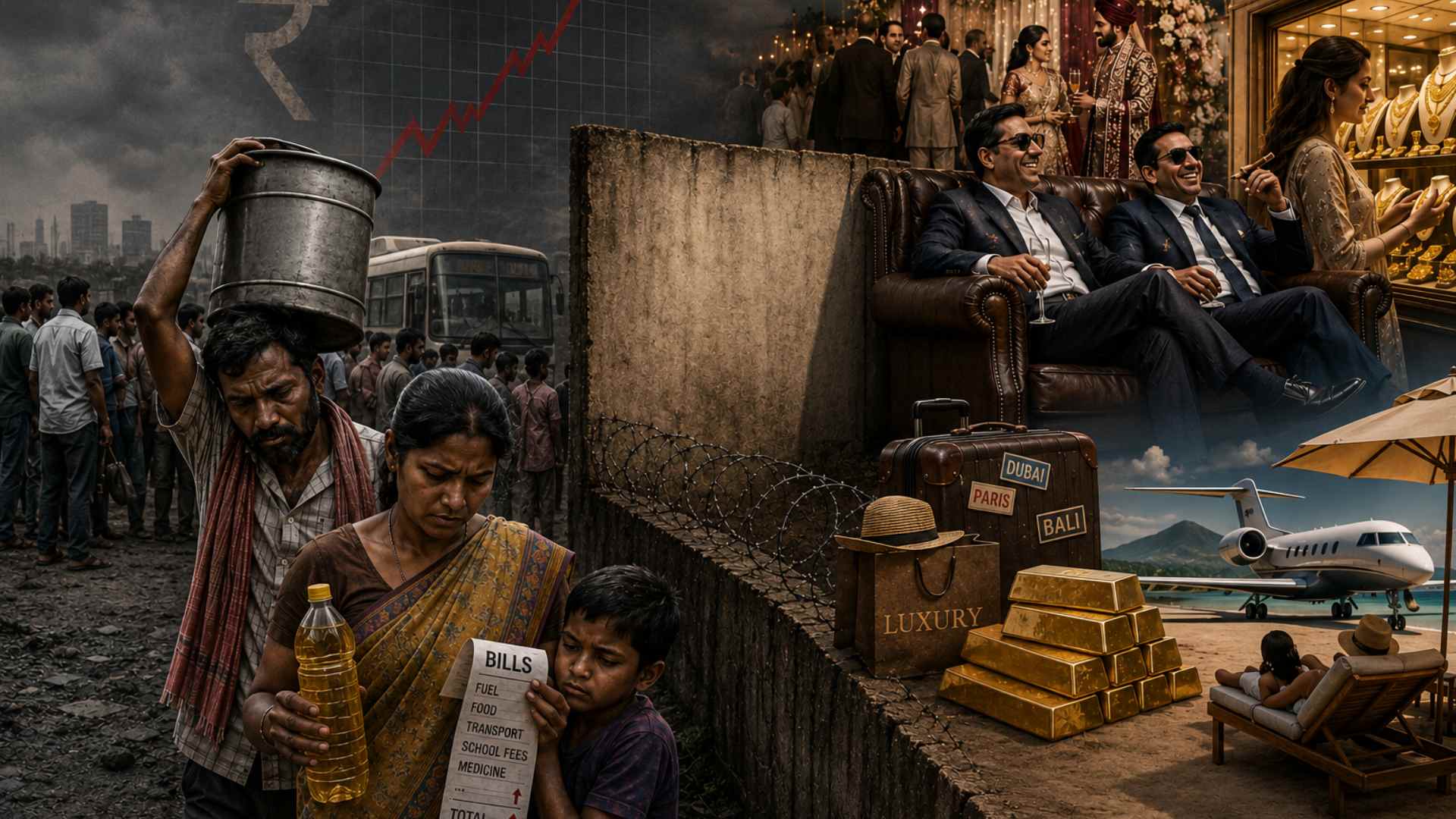
As several economists had anticipated, the close of the election season has been followed by calls for austerity. The Prime Minister has urged citizens to reduce spending on petroleum products and gold, revive practices from the Covid era such as work-from-home and virtual meetings, and cut back on cooking oil consumption. He described the West Asian crisis as “among the biggest crises of this decade.” With state elections concluded, concerns around rising fuel costs, import burdens, a weakening rupee, and depleting foreign exchange reserves have come to the fore. The response, however, has been an appeal for “small sacrifices” and “collective responsibility” from ordinary citizens, rather than a reconsideration of corporate tax exemptions or measures to tax high-net-worth individuals. While the super rich can certainly buy lesser gold and indulge in fewer foreign vacations or destination weddings (accounting for merely $16 to $18 billion), the actual burden of the imminent price hikes would fall heavily on the poor. After all, how many people in the country can realistically afford to work from home?
The macroeconomic situation is, admittedly, serious. Foreign exchange reserves have fallen by $38 billion in the two months since the onset of the West Asian conflict, with crude oil prices remaining above $100 a barrel. Yet placing the burden of adjustment on ordinary citizens – particularly those at the lower end of the income scale – raises important questions about policy priorities. This framing is consistent with the broader thrust of recent fiscal communications. The Union Budget signalled limited near-term relief for households, while the Economic Survey drew on the philosophical distinction between preya (fleeting comfort) and sreya (enduring good) to caution against short-term remedies. The message, in effect, is one of patient endurance rather than responsive intervention.
It is also amusing to see that the message of austerity is garnished with the rhetoric of “self reliance” and Swadeshi. The Swadeshi Jagan Manch for instance has welcomed the appeal for buying domestic products and saving foreign reserves. It is worth noting the tension in invoking the language of “self-reliance” and Swadeshi alongside trade policy that has made significant concessions to external pressures – including accommodating tariff demands and withdrawing the digital services tax. The free market fundamentalists have their own interest in celebrating the message of austerity. For them in fact the message ought to extend beyond the citizens and should apply on the government in its expenditure which they accuse of giving doles of subsidy and indulging in welfare spending all of which gets clubbed in the jargon of “freebies”.
What the current moment calls for is not austerity, but a strengthening of the conditions that make an economy genuinely resilient. Strong social spending, improved human development outcomes, and a broad-based domestic demand are better buffers against global headwinds than household belt tightening. The Economic Survey itself acknowledged that countries with stable currencies tend to be distinguished by manufacturing strength. India’s trajectory over the past decade has moved in the opposite direction: between 2020 and 2025, total export growth (compounded annually) was 9.4%, while merchandise export growth stood at only 6.4% – reflecting a continued dependence on services rather than goods. Durable external and currency stability, however, ultimately rests on goods-based export capacity. Sadly, in India we are witnessing simultaneously a lost decade of manufacturing and a depleted strength of the masses to consume reeling as they are under joblessness, inflation and successive shockwaves from demonetisation to pandemic to crude oil crisis.
