
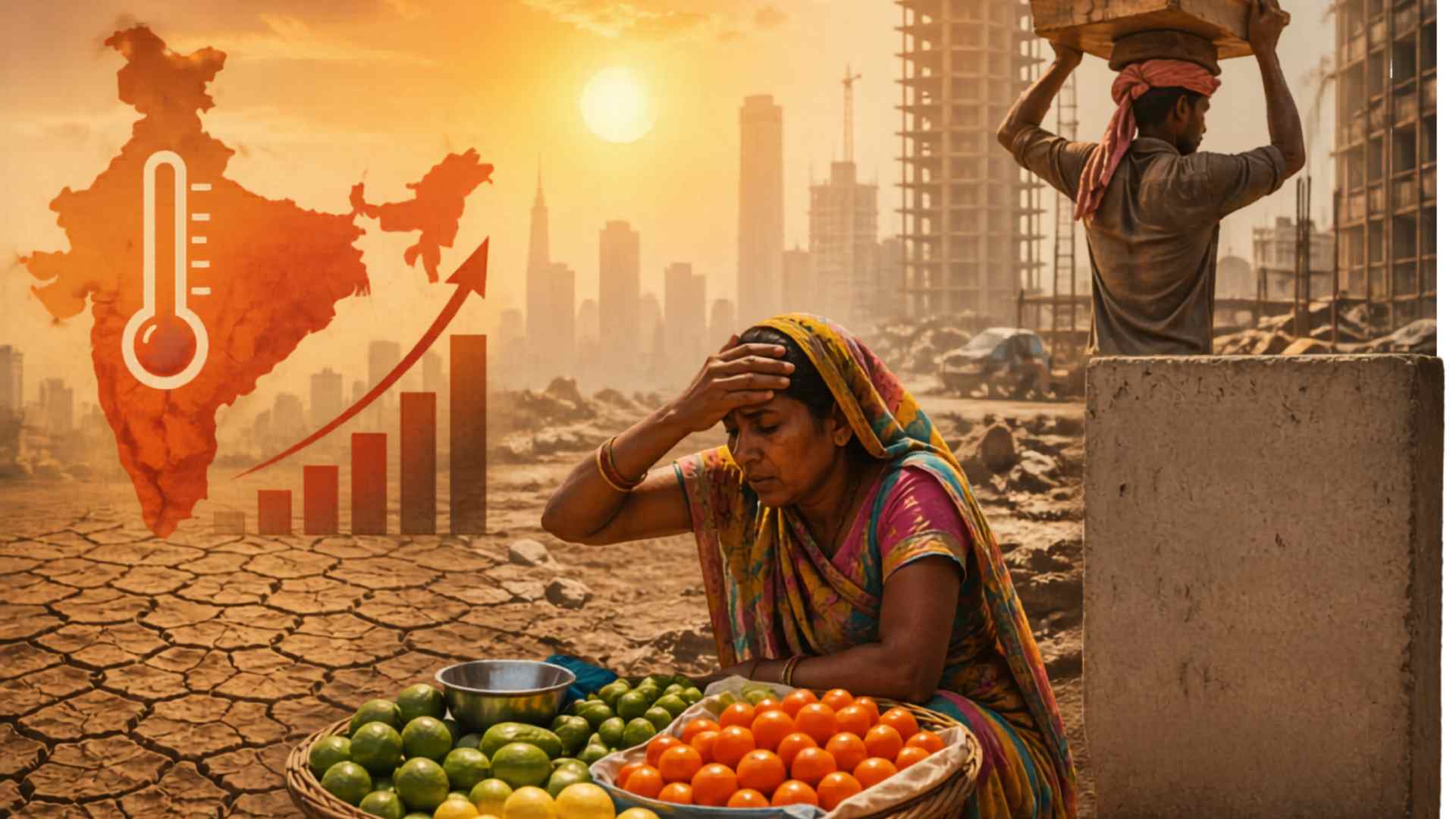
India’s worsening heatwave crisis is no longer just an environmental concern, it is a deepening economic and social emergency. Rising global temperatures, driven by the accumulation of greenhouse gases, have made heatwaves more frequent, longer, and more intense across the country. Over the past four decades, both the number of heatwave days and their duration have steadily increased, while the geographical spread of “heat hotspots” has expanded by nearly 1.5 times. Regions like northwestern and central India, the Indo-Gangetic Plain, and coastal belts are now on the frontlines of this crisis. What was once an occasional extreme event is becoming a structural feature of India’s climate reality.
Despite mounting evidence, policy responses remain inadequate and narrowly framed. India’s Heat Action Plans (HAPs) largely focus on emergency responses, issuing alerts, opening cooling centres, and managing daytime exposure. But they fail to address the changing nature of heat itself, especially rising nighttime temperatures and the urban heat island effect. Poor urban planning, shrinking green cover, and unregulated construction are intensifying heat stress in cities. Policies have yet to evolve into comprehensive frameworks that integrate climate adaptation with housing, labour protection, and urban design. In effect, India is treating heatwaves as short-term disasters rather than a long-term developmental challenge.
The economic consequences are severe and unevenly distributed. Extreme heat reduces working hours, lowers productivity, and increases health-related expenditures. According to estimates by the International Labour Organization, India could lose nearly 5.8% of its working hours by 2030 due to heat stress. This impact is equivalent to the loss of 34 million full-time jobs, with the agriculture and construction sectors being the most severely
affected.
The burden falls disproportionately on the poor, especially women in the informal economy. With nearly 90% of India’s workforce outside formal protections, most workers lack access to social security, healthcare, or income support during extreme weather. Women street vendors, in particular, face compounded vulnerabilities, reduced customer footfall, loss of perishable goods, lack of access to water and sanitation, and limited credit options. Recent evidence shows just how severe this impact has become. A study found that during peak summer, 96% of vendors reported fewer customers and 90% reduced their working hours. As incomes shrink and medical expenses rise, debt levels surge, more sharply for women than for men. For many, rising heat is no longer just a health hazard; it is a direct assault on their livelihoods.
This points to a deeper policy failure. The absence of climate-resilient infrastructure, such as shaded vending zones, rest areas, cooling spaces, and sanitation facilities, means that the burden of adaptation is pushed onto those least equipped to bear it. As heat intensifies, women vendors are forced into a vicious cycle of reduced earnings, rising health risks, and increased borrowing. Many fear the coming summers, knowing it will bring the same pattern of exhaustion and economic loss.
India’s heatwave crisis exposes a fundamental gap in policy thinking: the failure to connect climate change with economic justice. Addressing this crisis requires more than advisories, it demands investment in climate-resilient infrastructure, worker protections, and gender-sensitive social security systems.
