
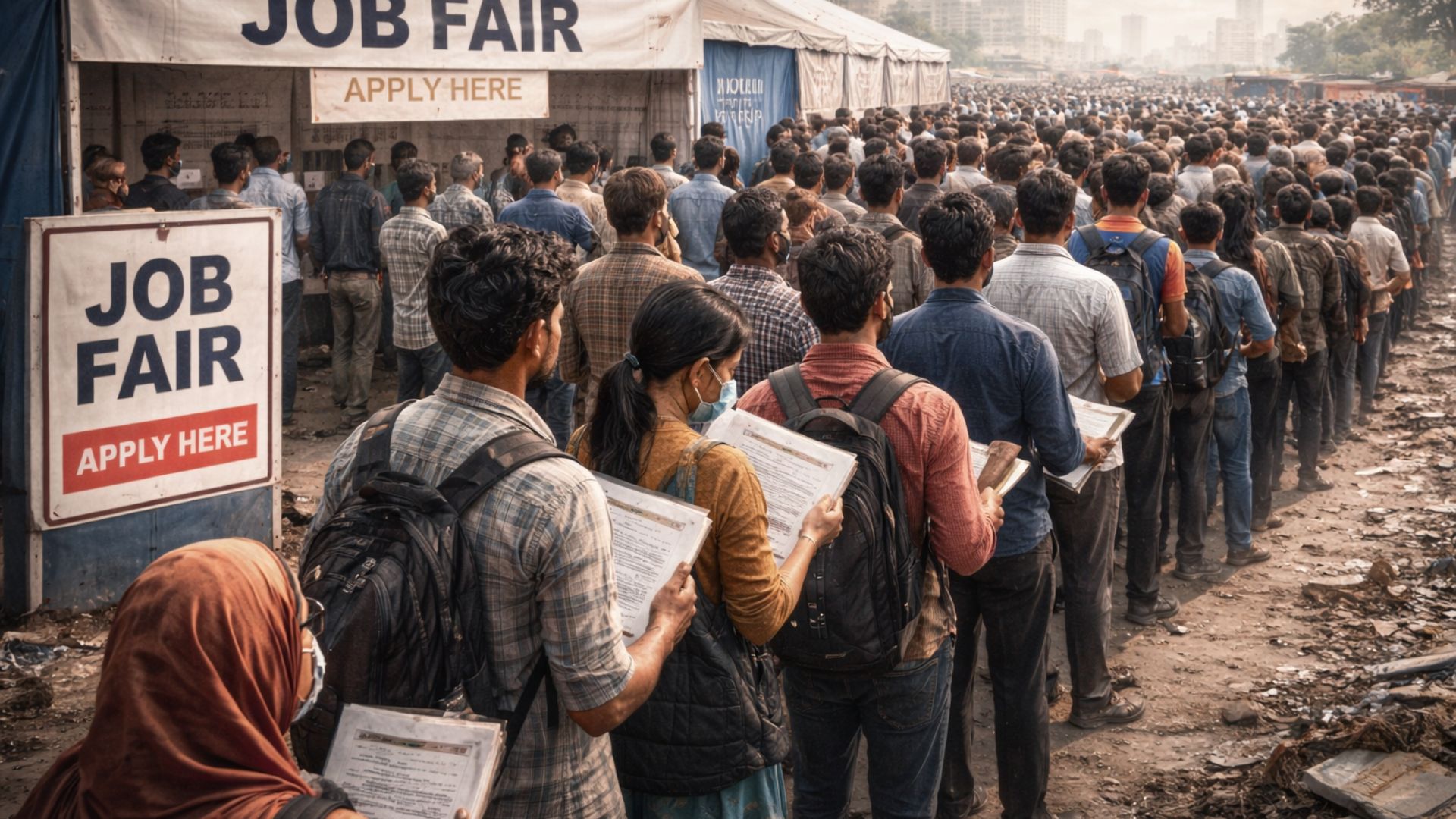
India’s latest Periodic Labour Force Survey numbers present a mixed picture, but the core message is troubling. Youth unemployment has risen to 14.8%, the highest in four months. This is more than just a number. It points to a widening gap between education and employment. Each year, more young people enter the labour market with degrees and aspirations, but the economy is not generating enough suitable jobs. The burden falls more heavily on young women, whose unemployment rate remains significantly higher than that of men.
At the same time, the overall unemployment rate has slightly improved to 4.9%. This may appear positive, but it hides deeper concerns. Much of this improvement seems to come from informal and short-term work, especially in construction and services. These are not stable or secure jobs. A person working even one hour a week is counted as employed. This raises questions about the quality of employment being generated.
Another worrying trend is the decline in youth participation in the labour force. Fewer young people are working or even looking for work. This may reflect growing discouragement. When job seekers lose hope and withdraw, it signals a deeper structural issue in the economy. The persistently low participation of women further highlights barriers such as lack of opportunities, safety concerns, and unpaid care responsibilities.
There is also a mismatch between skills and jobs. Many young people are educated, but not in areas where demand exists. At the same time, sectors with potential to generate employment are not expanding fast enough. This disconnect weakens both productivity and growth, and leaves a large section of the workforce underutilised.
Overall, the data suggests that India is not creating enough decent and meaningful jobs for its youth. Economic growth alone is not sufficient. There is a need for focused policy action on employment generation, better skill alignment, and improvement in job quality. Without urgent attention, India’s demographic advantage could slowly turn into a demographic burden.
