
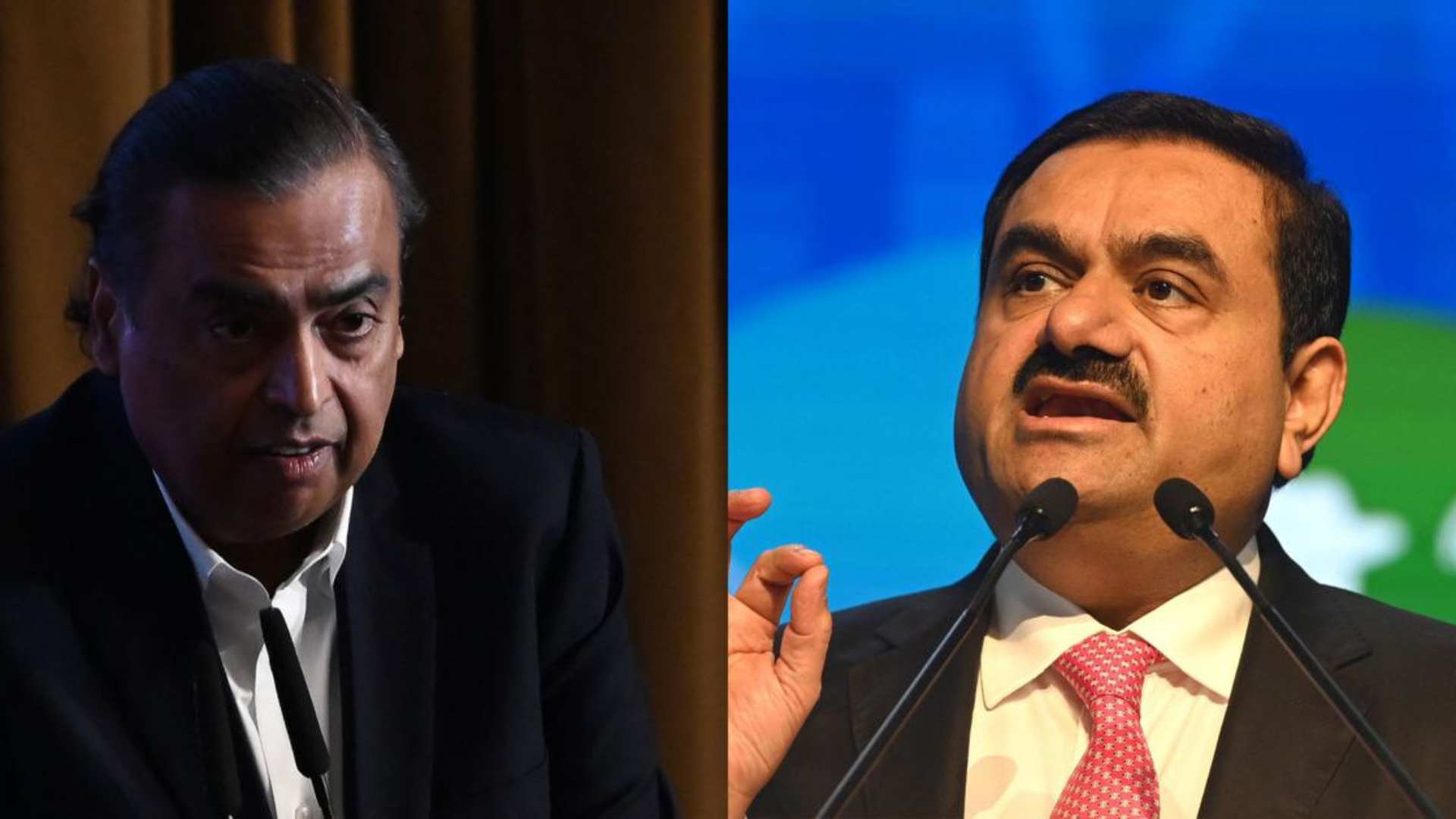
Industrialists Mukesh Ambani and Gautam Adani | Dibyangshu Sarkar/AFP, Indranil Mukherjee/AFP
A progressive wealth tax on the top 1,688 ultra-rich individuals in the country could generate more than Rs 10 lakh crore for welfare, noted the study.
Five of the richest families in India saw their wealth increase by 400% between 2019 and 2025, said a study published on Wednesday.
The study, titled Wealth Tracker India 2026 and released by non-profit organisation Centre for Financial Accountability and Tax The Top campaign, also noted that a progressive wealth tax imposed on the top 1,688 ultra-rich individuals in the country could generate more than Rs 10 lakh crore for welfare.
It categorised the ultra-rich as those who hold a net worth of more than Rs 1,000 crore.
The study said that the share of the bottom 50% in the country’s wealth stagnated at 6.4% by 2024.
“India is witnessing inequality at levels that are comparable to colonial times,” it added. “The country’s richest 1% control over 40% of the national wealth.”
The study said that the cumulative wealth of the ultra-rich in the country has surpassed Rs 166 lakh crore, which is nearly 50% of India’s Gross Domestic Product.
It argued that a 2%-6% progressive tax on the 1,688 ultra-rich families possessing over Rs 1,000 in wealth and an additional one-third inheritance tax imposed on them could enable the country to spend Rs 10.6 lakh crore annually on welfare schemes.
The benefits could include immediately increasing health and education spending by 1% each of the GDP and providing Rs 12,000 per month as a pension to the elderly, it added.
The study noted that Reliance Industries chairperson Mukesh Ambani’s wealth increased by 153% from 2019 to 2025. It said that if a 2% wealth tax had been collected from him during this period, it would have generated enough resources to provide free laptops to all Class 10 students for three years.
Adani Group chairperson Gautam Adani’s wealth increased by 625% in the same period, it said, adding that a 2% tax on his wealth could fund two full years of primary healthcare for the entire country. It could also provide for free air purifiers to nearly eight crore families most affected by pollution, it added.
“These findings expose the claim by the government that no resources are available to increase its investments on welfare,” the organisation and campaign stated in a press release. “While the government cuts the taxes for the corporations, it is deeply disturbing that today hard working individuals are paying more taxes than the big corporations.”
The release added that the Union government had written off Rs 19.6 lakh crore of loans in the last 11 years.
Anirban Bhattacharya, the campaigns director at Centre for Financial Accountability, said that “there were two Indias today”.
“One of the handful at the top whose wealth has been soaring by lakhs of crores,” he said. “And another India that is indebted, precariously employed, and largely from marginalised sections struggling to make their ends meet.”
Bhattacharya added that the wider this gap, the further the idea of India as enshrined in the Constitution recedes.
Raj Shekhar, a part of the Tax The Top campaign, said that it is the need of the hour to put a wealth tax on “these super rich to generate the resources we need to strengthen public services and address the inequality that threatens democracy”.
Jacob Joshy, a researcher of the Wealth Tracker India 2026 report, noted that although a wealth tax is no “magic bullet”, it can secure basic rights for the poor.
This article was originally published in Scroll.in and you can read here.
Centre for Financial Accountability is now on Telegram and WhatsApp. Click here to join our Telegram channel and click here to join our WhatsApp channel and stay tuned to the latest updates and insights on the economy and finance.
