
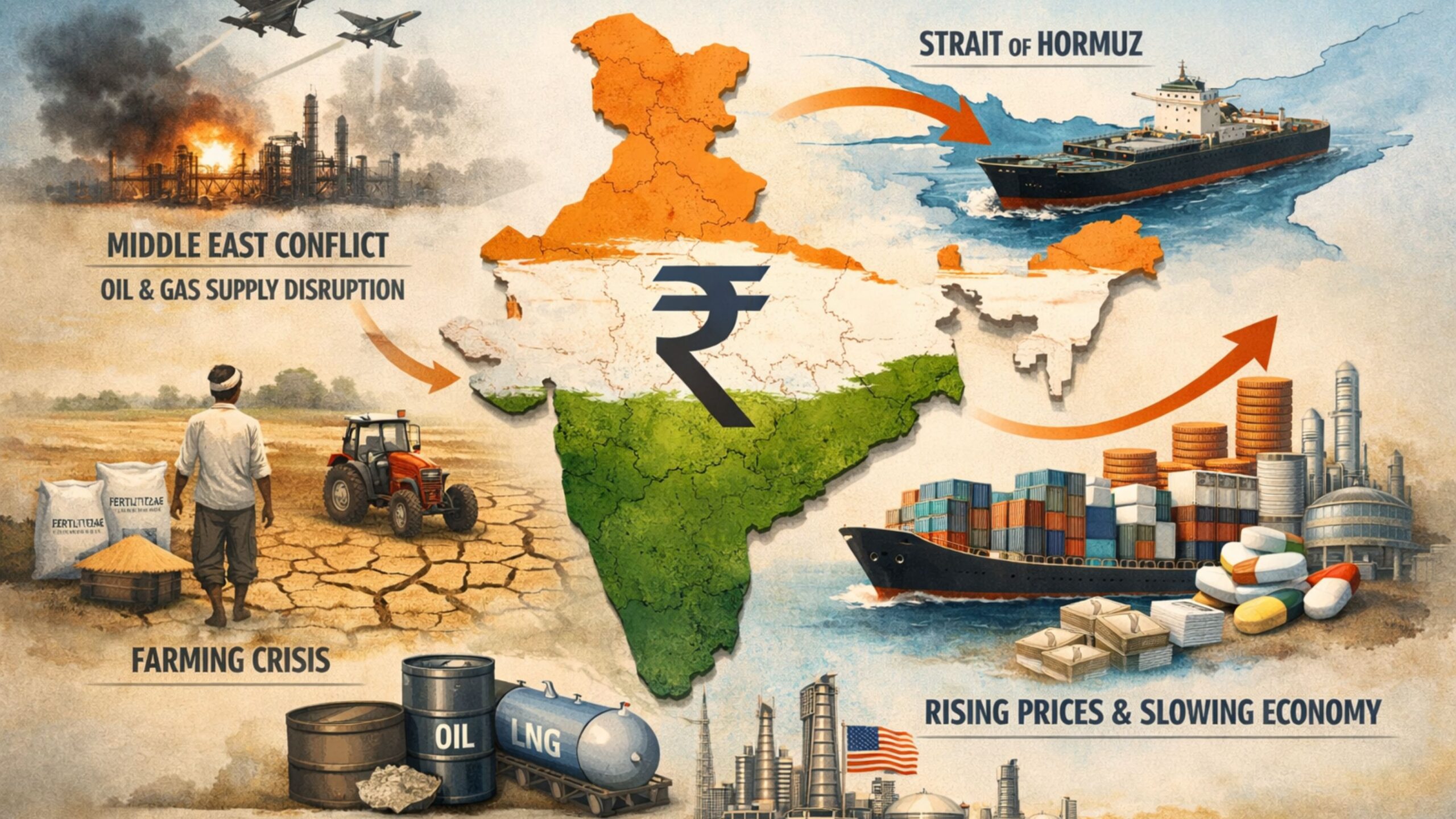
India may soon feel the economic tremors of the escalating conflict triggered by the strikes of Israel and the United States on Iran. What began as a military confrontation in West Asia is rapidly turning into a wider energy and trade crisis with direct consequences for the Indian economy. Much of the world’s oil and liquefied natural gas (LNG) production is concentrated in Gulf countries such as Saudi Arabia, Qatar and the United Arab Emirates, regions deeply linked to India’s energy supply. With attacks disrupting production facilities and shipping routes, and traffic slowing through the crucial Strait of Hormuz, energy markets are already tightening. For India, which depends heavily on oil and gas imports from this corridor, the conflict threatens to translate quickly into higher fuel costs, supply disruptions and wider inflationary pressure across the economy.
The most immediate concern is agriculture. India’s fertiliser industry depends heavily on imported LNG, much of it from Qatar, to produce urea, a crucial input for crop production. Disruptions in gas supply and the shutdown of fertiliser plants in the region could lead to shortages just as farmers prepare for the kharif season. Rising crude oil prices will also push up diesel costs, affecting tractors, irrigation pumps and transport systems that move food from farms to markets. This combination of rising input costs and supply shortages could put farmers under severe pressure. If fertiliser imports decline and domestic production slows, the government may be forced to increase subsidies, adding strain on the public exchequer.
The effects are not limited to agriculture. Shipping disruptions and higher insurance costs are already raising the price of imported raw materials across industries. Pharmaceutical companies are facing higher costs because key ingredients sourced from China are becoming harder and more expensive to ship. Industries such as ceramics, fertilisers and manufacturing are reporting production cuts due to gas shortages. Exporters of rice, tea, spices, and gems are also facing delays as shipments to West Asia are disrupted. If these disruptions continue, India could face the difficult combination of rising inflation and slowing economic growth.
At the same time, the crisis highlights a deeper structural issue in India’s energy security, its heavy dependence on a single corridor for oil imports. A large share of India’s crude oil comes from the Gulf and travels through the Strait of Hormuz, making the country highly vulnerable to geopolitical tensions in the region. Yet there is a striking contrast in the global energy landscape. Even as India faces energy uncertainty at home, Reliance Industries is reportedly backing a massive refinery project in Texas in the United States, a $300 billion deal highlighted by Donald Trump. The contrast is telling: while India’s energy supply chains remain exposed to disruptions in West Asia, its largest private energy company is expanding refining capacity abroad. The situation underlines the urgent need for India to diversify its energy sources and supply routes while navigating an increasingly complex geopolitical environment.
